Application Code Upgrades in Elixir
In this third and final part of my series about production code upgrades in Elixir, we will look at what happens during an application upgrade. Let’s get going!


In this third and final part of my series about production code upgrades in Elixir, we will look at what happens during an application upgrade. Let’s get going!
When you do calculations with money, every penny needs to be accounted for. Unfortunately, JS's Number type isn't up to the task. In this article, Julio Sampaio shows us why and teaches us how to do currency calculations the right way in JavaScript.
Online stores have been on a rise for the past decade, and if the massive success of Amazon has taught us anything, it is that superior design and in-store experience can put you on that high throne. Small and big brands that are launching online stores strive to build visual experiences that are unprecedented and likely to enthrall a wider audience. Plus, they spend a lot in ensuring that the in-store experience is memorable and user-friendly.
We’re always delighted to announce a new Verified Step: this time, we’re checking in with the Mussel Verified Step. Find out how can it help you with testing Push Notifications and Universal Links.
It was always a struggle to center items in the vertical axis, whether we were trying to position an icon or image beside the text, build one of those popular "hero" banners, or a modal overlay. Vertical centering components in CSS is not the easiest task, despite the fact that it is conceptually straightforward. This was especially true before modern CSS elements like flex and grid were supported by browsers.
In this podcast episode, we talked to Google Developer Expert Peter-John Welcome about his experience in Android DevOps, the roadmap to mobile success and the steps developers need to take to get there.
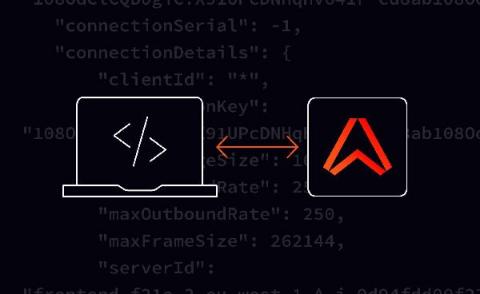
In Part 1 of this two-part series, we walked through how to bypass Ably’s SDKs and connect to Ably’s backend using websocat, where every JSON message has to be typed out by hand. In this second part, we’ll fix that tedious bit by switching to NodeJS, and we’ll continue our process of building our own minimal Ably (NodeJS) SDK.