Systems | Development | Analytics | API | Testing

Power Your Lead Scoring with ML for Near Real-Time Predictions

Every organization wants to identify the right sales leads at the right time to optimize conversions. Lead scoring is a popular method for ranking prospects through an assessment of perceived value and sales-readiness. Scores are used to determine the order in which high-value leads are contacted, thus ensuring the best use of a salesperson’s time. Of course, lead scoring is only as good as the information supplied.

How To Use a Customer Data Platform (CDP) as Your Data Warehouse

Here’s what you need to know about how to use your customer data platform (CDP) as your data warehouse: Whether you’re a mom-and-pop store or an ecommerce giant, understanding the customer journey is crucial to your organization’s success. When you collect data across a wide range of customer touchpoints, you can use this wealth of information for many different use cases: performing audience segmentation, improving your marketing campaigns, boosting customer engagement, and more.

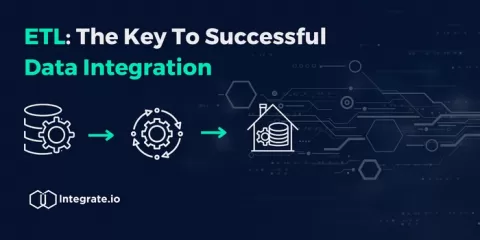
Complete ETL Process Overview (design, challenges and automation)

The Extract, Transform, and Load process (ETL for short) is a set of procedures in the data pipeline. It collects raw data from its sources (extracts), cleans and aggregates data (transforms) and saves the data to a database or data warehouse (loads), where it is ready to be analyzed. A well-engineered ETL process provides true business value and benefits such as: Novel business insights. The entire ETL process brings structure to your company’s information.

Star Schema vs Snowflake Schema and the 7 Critical Differences

Star schemas and snowflake schemas are the two predominant types of data warehouse schemas. A data warehouse schema refers to the shape your data takes - how you structure your tables and their mutual relationships within a database or data warehouse. Since the primary purpose of a data warehouse (and other Online Analytical Processing (OLAP) databases) is to provide a centralized view of all the enterprise data for analytics, data warehouse schemas help us achieve superior analytic results.

FinServ APIs: How to Improve Governance & Deploy with Confidence

Financial services innovation continues to progress at a breakneck pace. For example, fintech developers can programmatically spin up accounts, move money, and issue and manage cards with Increase or embed financial services into their marketplace with Stripe – capabilities that were unimaginable just a few years ago.

Data Governance and Strategy for the Global Enterprise

While the word “data” has been common since the 1940s, managing data’s growth, current use, and regulation is a relatively new frontier. Governments and enterprises are working hard today to figure out the structures and regulations needed around data collection and use. According to Gartner, by 2023 65% of the world’s population will have their personal data covered under modern privacy regulations.

Software Testing Tools - Quality Apps, Quality Digital Experiences

Modern digital users have the patience level of a typical 5-year-old. Apps that incorporate software testing tools have one core objective to meet: not to make the first encounter with a glitchy UI and unusable functionalities. Software quality in software engineering is a general expectation business stakeholders have. Unfortunately, testing is also “sacrifice” for time to market, postponing the release date and rejecting builds last minute in the development process.

8 Ways You Can Reduce the Costs of Your Data Operations

Don’t sacrifice scalability for savings - have it both ways When left unchecked, the cumulative costs of your company data can ramp up fast. From training CPU-intensive machine learning algorithms that aren’t used in production to supporting enormous databases storing every minute event “just in case”. Letting your data operating costs run without checks and balances can quickly cause costs to bloat beyond your allocated budgets.