This month, both Flutter and Codemagic have an anniversary to celebrate! Flutter 1.0 was released in December 2018 at Flutter Live. At the same event, we launched Codemagic, the community’s favorite CI/CD tool for Flutter. This also marked the beginning of the ongoing partnership between the Flutter team and Nevercode, the company behind Codemagic CI/CD.
Today, we are super excited to announce the grand opening of our Frankfurt core location in Germany! 🇩🇪🇪🇺 All users can now deploy their applications in the heart of Europe with one click, or API call, and enjoy all of the platform's features with the same pricing. Give it a try, sign up and deploy your full-stack apps now! As usual, we will seamlessly deploy your services across a fleet of high-performance MicroVMs running on top of BareMetal servers.
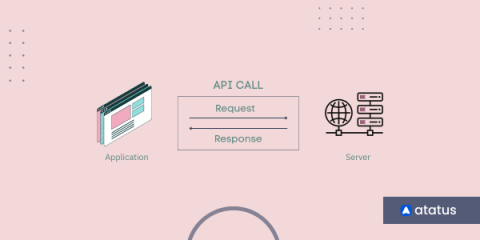
IBM recently announced the deprecation of its Cloud API Gateway, a service used to create and manage APIs by placing a gateway in front of existing IBM Cloud endpoints. With this move, IBM Cloud Functions and IBM Cloud Foundry are no longer able to use Cloud API Gateway service for rate limiting, splitting, and authentication.
Security and surveillance cameras are now almost ubiquitous in areas where people gather in numbers. From urban public spaces to sports grounds, shopping malls and offices, these cameras play critical roles in keeping people and property secure and protected, deterring crime and fraudulent activity, and helping to catch offenders. Founded in 2008 and now owned by Canon, BriefCam is a software provider committed to maximizing the value that video surveillance can deliver.
For the vast majority of US citizens, the front lines of conflict are witnessed from thousands of miles away on the nightly news. But for government agencies, these physical conflicts are the tip of the iceberg as cyberattacks persist as an underlying constant, inflicting enduring damage regardless of geopolitical tension or location.
A container comprises no operating system images in contrast to a server or virtualized machine. Due to this, they are lighter, more portable, and have less overhead. By using containers, operating systems can be virtualized. Microservices, software processes, and applications may all be run in one container. Among the files in a container are executables, binary code, libraries, and configuration files.