Systems | Development | Analytics | API | Testing

Model Context Protocol (MCP) Security: How to Restrict Tool Access Using AI Gateways

For too long, the Model Context Protocol (MCP) has operated on a principle of open access: connect an AI agent to an MCP server, and it gets access to every single tool that server offers. While this approach is simple for initial experimentation, it quickly becomes a liability in production.
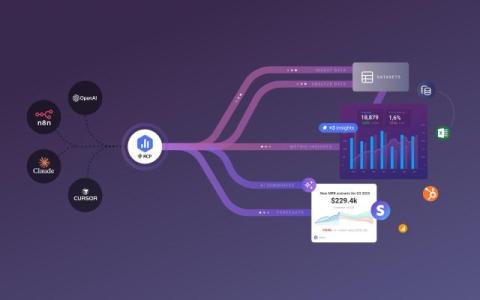

New: Connect Databox to Claude, ChatGPT, N8N, and more!

Most teams today are expected to move faster and be data-driven, but getting clear answers about performance is still harder than it should be. Even simple questions often require jumping between dashboards, piecing together insights manually, or relying on a small group of data experts to dig in. The process can be slow, and it often leads to more questions than answers.

How to Cut BI Ticket Backlogs with AI-ETL for Self-Serve Analysts

Your BI team didn't sign up to spend 69% of their time on repetitive data preparation tasks. Yet this is the reality for most data teams drowning in support ticket backlogs while strategic initiatives languish. Every hour spent manually updating schemas, troubleshooting failed data loads, or running ad-hoc queries is an hour not spent on the analytics that actually drive business decisions.

Top 5 AI-Powered SAST Tools for 2026

Static Application Security Testing has survived multiple cycles of skepticism, reinvention, and disappointment. For years, SAST was criticized for producing noise, slowing development, and failing to reflect real-world risk. Yet in 2026, SAST has not disappeared. It has changed its role. The shift is not that static analysis suddenly became perfect. It is that organizations finally stopped asking SAST to do the wrong job.

Introducing the Kong MCP Registry: Connect AI Agents with the Right Tools

In the rapidly evolving landscape of AI-driven development, the Model Context Protocol (MCP) has emerged as the critical standard for connecting AI applications to the data and tools they need. We are excited to announce the Technical Preview (TP) of Kong MCP Registry, a major milestone in our mission to provide the most comprehensive platform for modern API and AI management.

Connect Your Local AI Model to Enterprise Databases with DreamFactory: A Real-World Integration Story

A mid-sized enterprise had a straightforward but powerful idea: use their locally-hosted AI model to automatically generate summaries of employee performance review data stored in their SQL Server database. The workflow seemed simple enough: The reality? This "simple" integration touches on some of the thorniest problems in enterprise software: database security, API orchestration, authentication, timeout management, and reliable data transformation.

Why transparent AI is the only AI you can trust in QA

AI fosters speed. Transparency fosters confidence. AI for QA testing is suddenly everywhere. Every tool claims it’s “AI-powered.” Every demo promises smarter test generation, faster maintenance, and fewer bugs. Plus, with AI accelerating the pace at which developers write and ship code, QA leaders are under growing pressure to keep up. It makes sense that teams are looking for AI for QA testing. But here’s the uncomfortable truth: AI in QA only works if you can trust it.

Scaling Personalization Engines Without Scaling Risk

Personalization engines sit at the core of most modern digital platforms. From content ranking to feature recommendations, AI-driven personalization shapes how users experience products at scale. When these systems work well, they feel invisible. Engagement improves, friction drops, and platforms grow efficiently. But as personalization engines scale, so does their influence, often in ways engineering teams do not fully anticipate at the outset.

The Agentic Analytics Leap: How AI Agents Are Upgrading Your BI Team

Your data team is drowning. They spend 80% of their time on repetitive reporting and only 20% on strategic analysis. You hired them to be analysts, but they’re stuck being report builders. Every Monday morning is the same: pull the numbers, update the spreadsheet, format the email, send it out. Rinse and repeat.