Systems | Development | Analytics | API | Testing

Best 5 Tools for Monitoring AI-Generated Code in Production Environments

AI-generated code is no longer experimental. It is actively running in production environments across SaaS platforms, fintech systems, marketplaces, internal tools, and customer-facing applications. From AI copilots assisting developers to autonomous agents opening pull requests, the volume of machine-generated code entering production has increased dramatically. This shift has created a new operational challenge: how do you reliably monitor AI-generated code once it is live?

Hybrid by Design: The New AI Mandate

For the better part of a decade, the enterprise technology mandate was simple: “cloud first,” or more pointedly “cloud only.” Modernizing meant moving to the public cloud, and on-premises architecture was viewed as legacy infrastructure to be maintained until it could eventually be migrated. Fast forward to today, that narrative has shifted dramatically, with AI as the major catalyst.

Building the Foundation for Responsible Autonomy: Preparing for the Agentic Era of AI

Over the past two years, generative AI has transformed how we create, learn, and interact. But a more profound shift is already underway—one that changes not just how we work but who (or what) does the work itself. We are entering the era of agentic AI, where systems don’t merely answer questions—they reason, decide, and act on our behalf.

From Qlik to Quick: How to Transform Qlik Dashboard Analysis With Hidden Insights AI

The gap between having data and getting actionable insights has always been a challenge in business intelligence. Users face dashboards filled with information but struggle to answer critical questions without exporting to Excel, waiting on developers, or missing key trends hidden in their filtered data. But with technological advancements like natural language AI agents, users can access insights and patterns they might otherwise miss.

Building Bitrise's AI platform: Scaling AI features across teams

This is the fourth and final installment in our series about bringing AI to Bitrise. In Part 1, we explained why we built our own AI coding agent. Part 2 covered our browser-integrated AI Assistant. Part 3 detailed how we brought AI to the Bitrise Build Cloud. In this final post, we'll explore how we unified these efforts into a cohesive AI Platform.

Multi-agent AI systems need infrastructure that can keep up

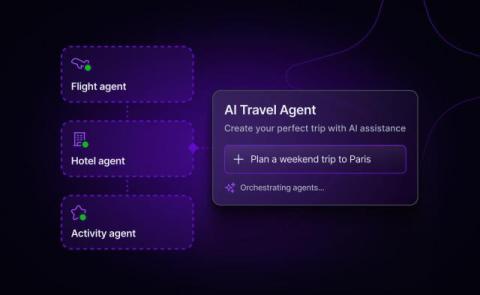
When you're building agentic AI applications with multiple agents working together, the infrastructure challenges show up fast. Agents need to coordinate, users need visibility into what's happening, and the whole system needs to stay responsive even as tasks branch out across specialised workers. We built a multi-agent travel planning system to understand these problems better. What we learned applies well beyond holiday booking.

Why AI can't debug your API integrations (yet)

The next generation of debugging doesn’t depend exclusively on the quality of AI models, but it’s heavily dependent on feeding AI tools the context they need to be useful. AI coding assistants have transformed how we write code. For example, GitHub Copilot, Cursor, and ChatGPT can generate Stripe integration boilerplate in seconds. They'll scaffold your payment flow, suggest error handling patterns, and even write unit tests.

AI Dev Meetup on Coding Agents with OpenAI and LangChain

Last Tuesday, we kicked off our first AI developer meetup of 2026 with a packed room and over 350 signups! This was our first content-focused event since organizing AI Engineer Paris 2025, and it was a great night bringing the AI dev community together to share ideas and learn from some of the most exciting builders in the space. Want to join next time? Follow our global events calendar to stay in the loop. Our meetup's theme was coding agents. We heard from speakers at Koyeb, OpenAI, and LangChain.

Best AI Test Case Generation Tools in 2026

AI test case generation tools are transforming how QA teams create, maintain, and execute tests by automating repetitive work and improving coverage. Teams that adopt AI for QA now will reduce manual test creation time while expanding their test coverage. Software testing has always been a balancing act between thoroughness and speed. You want comprehensive coverage, but you also want to ship features before your competitors do.