Systems | Development | Analytics | API | Testing

Making Data Work for AI

AI is not a pilot anymore. In 2026, it is the operating agenda. And if you’re leading a business or an IT project right now, you’re probably getting the same two questions. First: “When do we see real outcomes?” Second: “Can we trust what we’re getting?” Those are fair questions. They’re the right questions. Because the truth is, the model is rarely the problem. The hard part is everything around it. The data. The access. The silos. The controls.

Building for Agentic AI

Our customers’ worlds are complex, and for good reason. It’s multi-cloud. It’s SaaS plus on-prem. It’s Snowflake, Databricks, AWS, Azure, Salesforce, and more. Underneath every one of those choices is the same constraint: data must be accessible, stay current, and stay controlled. The hard part is getting trusted data where it needs to be, when it needs to be there, with the controls to use it responsibly.

Why Deterministic Queries and Stored Procedures Are the Future of AI Data Access

Executive Summary: As enterprises integrate AI and large language models (LLMs) into their data workflows, the need for predictable, secure, and auditable database interactions has never been greater. Deterministic queries—particularly those encapsulated in stored procedures—provide the guardrails necessary for both human analysts and AI systems to access sensitive data safely.

From Excel Hell to AI-Powered Finance: A CEO's Journey to Data-Driven Decision Making

"We were wasting too much time debating the accuracy of numbers as opposed to using that time to make decisions." That's how Satty Saha, Group CEO of CreditInfo-a credit bureau operating across 30+ countries-described the moment he realized his organization had a data problem. Not the kind of data problem you'd expect from a company whose business is data and analytics. An internal data problem.

From Buggy Beginnings to AI-Powered Quality with Cristiano Caetano

Recently, I had the pleasure of sitting down with Cristiano Caetano, VP of Product at Katalon, to explore his journey in software testing. It was a path that began with frustration, evolved through innovation, and now looks toward an exciting AI-driven future. Cristiano's insights shed light not only on his personal career path but also on the broader evolution and future of software testing.

The Rise of AI-Driven Performance Engineering

There’s a particular kind of exhaustion that comes with traditional performance testing. You spend weeks building perfect load scenarios, run them overnight and wake up to a wall of red in your monitoring dashboard. Half your day disappears into log files, trying to piece together what went wrong. And just when you think you’ve got it right, a minor UI update breaks everything and you’re back to square one. If this sounds familiar, you’re not alone.

Copilot vs Cursor: A Complete AI Coding Assistant Comparison

Coding with artificial intelligence is not just a nice-to-have; AI applications in computer programming are becoming integral to modern computer programming workflows. Presently, two primary applications dominate the discussions in this area: GitHub Copilot and Cursor AI. While both applications provide faster coding times and fewer bugs, fewer bugs, and smarter code, they offer such features in extremely different ways.

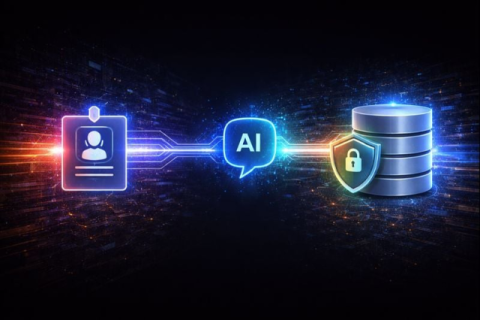
Identity Passthrough for AI: Why Your LLM Needs to Know Who's Asking

When a user asks your AI assistant a question, who actually runs the database query? In most enterprise AI deployments, the answer is troubling: a shared service account with broad access to everything. The user's identity evaporates the moment their request enters the AI system. This architectural pattern creates security gaps, compliance failures, and data leakage risks that undermine enterprise AI adoption.