Systems | Development | Analytics | API | Testing

Secrets, Credentials, and the Kubernetes Attack Surface in AI Environments

Every AI workload needs credentials: cloud storage keys, model registry tokens, database passwords, and API keys for external services. How those credentials are managed in Kubernetes determines whether they stay secret or become the entry point for a serious breach. ClearML Vaults addresses this directly by separating credential ownership from credential use at the platform level. This is the second post in our four-part series on Kubernetes Security for Enterprise AI Environments.

Your AI Coding Assistant Can't See Production Errors. Here's How to Fix That.

You’ve connected your AI coding assistant to your codebase, your docs, maybe even your internal wiki. It can autocomplete functions, explain unfamiliar code, and scaffold new features. But ask it what’s actually breaking in production right now, and it has nothing. No stack traces, no error trends, no idea which deploy introduced the regression your on-call just got paged for.

Building a Secure, Scalable AI Infrastructure with Kong and Akamai: A Technical Introduction

As organizations transition from experimental AI to production-grade systems, they often face a fragmented landscape of unmanaged LLM providers, complex tool integrations, and escalating security risks. This infrastructure gap leaves AI applications vulnerable to sophisticated threats like prompt injection and data exfiltration, necessitating a unified stack that secures the edge while streamlining the data plane..

Why RBAC Isn't Enough: Real Tenant Isolation in Kubernetes AI Environments

Role-based access control is essential, but it’s not isolation. When multiple AI teams share a Kubernetes cluster, RBAC controls what they can do; it doesn’t control what they can reach, what they can see, or what happens when something goes wrong in a neighboring workload. This is the first post in our four-part series on Kubernetes Security for Enterprise AI Environments.

Reclaim Data Sovereignty for the AI Era

For the modern IT leader, managing a hybrid cloud often feels like navigating a series of operational constraints rather than executing a strategy. You’re caught between the board’s demand for immediate AI results with disparate data silos, rising egress costs, inflexible consumption models, overworked employees, and the looming impact of hardware refresh cycles. There’s a constant friction between the agility of the cloud and the resilience of your on-premises core.

Why we built a dedicated SDK for realtime AI streaming

If you've built a conversational AI feature, you know the pattern. Client sends a message, backend calls a model, response streams back over HTTP. SSE mostly, or WebSockets if you need bidirectional. For a single user on a single device, it works well. The trouble is the best AI products right now have moved well past that.

How AI is Transforming SME Lending

For decades, SME lending has lived in a strange space. On one hand, small and medium enterprises are the backbone of every economy. They drive employment, fuel innovation, and keep local markets alive. On the other hand, getting access to credit has always been frustratingly difficult for them. Why? Because traditional lending systems were never designed for them. Banks relied heavily on collateral, long credit histories, and static financial statements.

ClearML Enterprise v3.29: Fine-grained Control for Enterprise AI Teams

ClearML Enterprise v3.29 builds on the governance and infrastructure foundations introduced in recent releases. This update focuses on giving administrators and AI teams more granular control over resource allocation, gateway access, and pipeline management while delivering a meaningful set of UI quality improvements across the platform.

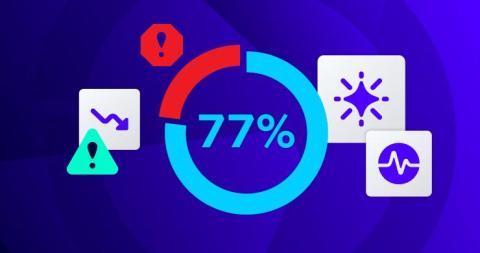
The Great Disconnect: Why 77% Confidence in AI Results Is a Major Business Risk

According to the Perforce 2026 State of DevOps report, 77% of organizations express high confidence in the outputs generated by their artificial intelligence systems. Yet, this widespread optimism masks a critical vulnerability. While executive confidence in AI results remains high, only 38% of organizations have embedded AI deeply across their delivery stages. Plus, only 39% maintain the fully automated audit trails required to verify these results.