
Systems | Development | Analytics | API | Testing

EDI Claims: Everything You Need to Know About Claims Processing in Healthcare

Imagine that you’re a healthcare provider who’s just treated a patient. It’s time to get paid for your services, but you don’t want to deal with endless paperwork and unnecessary phone calls. There’s a better and more streamlined way to handle it — the electronic way. Electronic Data Interchange (EDI) is responsible for providing just that. EDI is at the core of modern healthcare claims processing.

A Guide to ERP Data Migration: Challenges and Best Practices

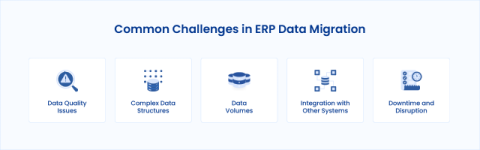
Across industries worldwide, businesses are turning to ERP to automate repetitive tasks, enjoy easy scalability, stay flexible, and derive insights using a single source of truth. According to Statista, Enterprise Resource Planning (ERP) software market revenue will reach USD 53.15 billion this year. If your organization implements an ERP system, you’ll find that data migration is one of the most critical components of this process.

The Impact of Data Quality on M&A Success

Technological advancements are driving mergers and acquisitions (M&As) at an unprecedented rate. Companies aim to extend their market reach, acquire new technologies, and achieve cost synergies through these deals. For instance, in 2023, nearly 40,000 mergers and acquisition (M&A) deals were completed worldwide. For a successful merger, companies should make enterprise data management a core part of the due diligence phase.

Business Orchestration and Automation Technologies: Benefits, Examples, and What to Look For

In business, speed is key. When facing rapid change, adapting slowly eats into an organization’s revenue, opportunities, and market share. This has led organizations to deploy business process automation technologies to streamline processes, roll out products faster, and deliver services of a higher quality. However, organizations often stitch together disparate automation tools, leading to disjointed IT ecosystems and bloated licensing costs.

5 Benefits of Automating the Pharmaceutical Product Lifecycle

Developing, distributing, and monitoring a drug or medical device is an extensive process. It involves the coordination of people, systems, and substantial amounts of data. Production slowdowns negatively impact the product lifecycle, adding unnecessary costs and keeping valuable products from the patients who need them. The need for automation is evident.

Workflow Optimization: 3 Examples and Best Practices

Think about a time when insufficient information or inaccessible data slowed you down. Or maybe a time when your work required manual data entry that resulted in human error and rework, taking time away from higher value tasks. These moments of process frustration and inefficiency are exactly what workflow optimization helps address. Workflow optimization describes the strategies and measures taken to improve the flow of daily tasks and make processes more efficient.

A Comprehensive Guide to Workflow Automation

Workflow automation involves automating repetitive tasks and processes in a sequence using technology, reducing the need for manual intervention. It involves designing, creating, deploying, and automating business processes like data entry and customer interactions. Workflow automation uses software to replace manual and paper-based processes. Its primary goal is to ensure that the right people work on the right tasks at the right time.

Appian 24.3 Highlights

Appian brings #orchestration, #automation, and #intelligence together in a secure, performant platform for managing your most complex processes. The latest release of the Appian Platform delivers practical enterprise AI use cases with expanded compliance to help developers build faster, business users work smarter, and organizations prepare for AI regulations.

Data Migration Challenges: Strategies for a Smooth Transition

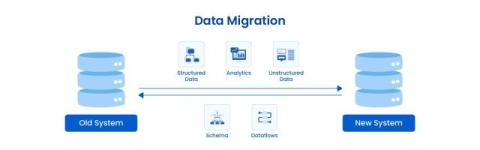
Smooth and effective data migration helps organizations move data across systems efficiently to maintain their competitive advantage. Still, Gartner reports that only 17% of initiatives involving data migration are completed within their budgets or set timelines. Understanding these data migration challenges is the first step toward overcoming them. In this blog, we’ll explore data migration and its different types, challenges, and strategies for dealing with them.

Data Mesh Defined: Principles, Architecture, and Benefits

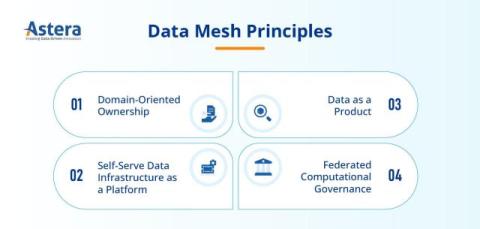
Organizations today are accumulating data more than ever. Traditional data management approaches, such as centralized data warehouses and siloed data marts, are struggling to keep pace with the ever-increasing volume, velocity, and variety of information. The complexity of modern data environments is outpacing the capabilities of these legacy systems and demands a more agile and distributed solution.