In today’s digital world, staying ahead of the curve is a constant challenge for organizations. The pace of business is exponentially higher now than it was even a decade ago. Technology is evolving, and the ability to keep current has become a critical success factor. Organizations need to embrace constant and rapid change. They need to equip all employees with information, motivation, and support to think critically and systemically, allowing them to innovate and reduce waste.
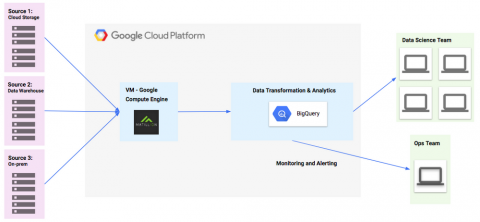
There are plenty of trends and hot topics in the enterprise technology market today. One common area we hear about from users is that there’s a lot of data to collect, manage, and analyze. And whatever industry you’re in, you probably want to do something more with your data. We built BigQuery, one of the important tools in the Google Cloud Platform (GCP) arsenal, to provide serverless cloud data warehousing and analytics with built-in machine learning to meet modern data needs.
The Soviet era left Mongolia with a legacy of manual banking processes that requires huge quantities of paperwork. This means that customers need to visit branches frequently for simple things like changing a PIN number or requesting a credit card. Since we count 2.8 million of Mongolia’s 3.3 million citizens as our customers, this could mean long lines at the bank, with an average wait time of 25 minutes for each visit. We wanted to change that.
60% of agencies say that organic drives the most traffic for clients right now. How will that change over the next 12 months? We asked them to share.
As I work with customers around the world and across verticals, I’m struck by a common pattern: many savvy business people and technologists grasp the value of the new application programming interfaces (APIs) they’re creating for external ecosystem use cases, such as providing partners access to data or functionality, but they often see both the APIs they already have and those they build for internal use in a different light — not as software products that let developers
Since Black Friday first became a thing, roughly 15 years ago, practically every big name in digital retail has experienced some form of outage while trying to cope with its demands. Last year alone, international retailers Lowe’s, Debenhams and Game all suffered downtime at one point or another, bringing howls of complaint and derision from customers.
For over 30 years, the dashboard has been the delivery paradigm of choice for decision support and executive information systems. It started with Business Objects and Cognos, and today Qlik, Tableau, Power BI and other vendors are still using dashboards as the medium of data delivery. Rather than thinking about whether there’s a better way to deliver insights, dashboard dinosaurs just keep using the same paradigm.