Do your analysts have the skills to interpret data?
I’ve read and heard a lot about how organizations need ‘data interpreters’ lately. For me, this raises the question of what do analytics departments do today?


I’ve read and heard a lot about how organizations need ‘data interpreters’ lately. For me, this raises the question of what do analytics departments do today?
The Yellowfin team spent their Wednesday at the She Loves Data event in Melbourne. It was brilliant. If you’re not familiar, She Loves Data (previously called Data Girls) is a data analytics initiative, that focuses on teaching and encouraging women to learn about data, technology, and analytics. They hold regular workshops for women in 6 different APAC cities to build a community for them to come together to learn, connect with each other, and have fun.
Data is the lifeblood of AI. An AI system needs to learn from data, as well as from humans, in order to be able to fulfill its function. Unfortunately, organizations are already struggling to integrate data from multiple sources to create a single source of truth on their customers, products, or other data. AI will not solve these data issues, it will only make them more pronounced.
Ryan Shelley, founder of SMA Marketing, shares how providing real-time access to performance data has transformed the agency/client relationship.
As more and more businesses turn to advanced data analytics to help them make smarter decisions, run real-time analytics, and improve business operations, an increasing number are modernizing their data warehouses to make it all possible. For many businesses, knowing how to modernize means understanding where their data warehouse sits on the spectrum between traditional and cutting edge. To help, we collaborated with TDWI to offer the data warehouse maturity assessment.
Remember that feeling right after your fantasy football draft, when you were certain that you had just drafted the championship team? Fast forward to the close of fantasy football week eleven, how is that team looking now? For me, I am battling for one of the last playoff spots in my league and I am holding my own in daily fantasy football – never quite playing the perfect combination of players.
In our never-ending effort to help you track and destroy bugs, we’ve been listening to you. Based on your requests, we recently added a new feature to Bugfender: In-App Feedback. We’re pretty excited about it.
We’re in the early stages of a dramatic transition for the analytics industry. More and more of the jobs that were previously done by analysts are being automated. Technology is changing the way organizations receive information. People are being alerted to both good and bad news as it happens and this has profound behavioral consequences for organizations.
In today’s digital world, staying ahead of the curve is a constant challenge for organizations. The pace of business is exponentially higher now than it was even a decade ago. Technology is evolving, and the ability to keep current has become a critical success factor. Organizations need to embrace constant and rapid change. They need to equip all employees with information, motivation, and support to think critically and systemically, allowing them to innovate and reduce waste.
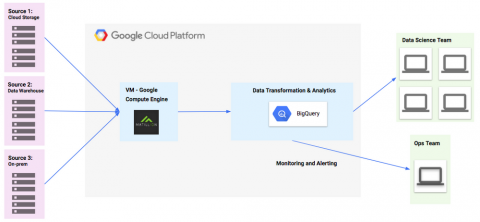
There are plenty of trends and hot topics in the enterprise technology market today. One common area we hear about from users is that there’s a lot of data to collect, manage, and analyze. And whatever industry you’re in, you probably want to do something more with your data. We built BigQuery, one of the important tools in the Google Cloud Platform (GCP) arsenal, to provide serverless cloud data warehousing and analytics with built-in machine learning to meet modern data needs.