Systems | Development | Analytics | API | Testing

Non-Functional Requirements: Tips, Tools, and Examples

Developing high-quality products means carefully defining and tracking both functional and non-functional requirements (NFRs). But what exactly are non-functional requirements and how can you best manage them? This guide will help you understand the difference between functional and non-functional requirements with real-world examples. It also covers best practices for writing them and discusses how to track and manage non-functional requirements for greater efficiency.

The 6 Building Blocks of ETL Architecture

Business intelligence (BI) and analytics projects depend on efficient and effective data integration, which in turn depends on processes such as ETL (extract, transform, load). Rather than performing data analysis from multiple sources in place, ETL collects information within a centralized data warehouse for faster and easier processing and querying.

Cloud Data Integration with MongoHQ and Integrate.io

Integrate.io loves MongoDB - MongoDB is great for storing and querying data, while Integrate.io is great for transforming the data and getting it ready for analysis. That’s why we integrate with MongoHQ, one of the leading MongoDB-as-a-Service solutions. Since MongoHQ is built on the cloud, it allows for fast and scalable work with MongoDB.

Cross-Database Queries with REST APIs

Cross-database queries with REST APIs make it easier to access and analyze data stored in multiple databases without physically moving it. Here's why this matters: What it Does: It allows you to query different databases (e.g., PostgreSQL, MongoDB, MySQL) through a single interface. Why it Works: REST APIs provide a secure and standardized way to connect databases, enabling seamless data integration. Key Benefits: Challenges include performance issues, data format inconsistencies, and security risks.

Test automation that keeps up with your business applications' speed

Business applications like Enterprise Resource Planning (ERP) and Customer Relationship Management (CRM) systems stand as the nervous systems of enterprise operations. They integrate core business processes, manage customer interactions, and provide a unified view of business operations. Back in 1999, Hershey's faced a major setback due to a flawed ERP implementation, resulting in a significant loss of sales and profits.

From Spreadsheet to TestOps: When & How to Level-Up Test Management

Managing software testing via spreadsheets might be adequate for small-scale projects or startups. However, as your team grows and projects become more complex, this approach quickly reaches its limits. That's why TestOps was born. As a concept, TestOps is relatively new, having existed only since 2019. However, it is the kind of concept that has changed and surely will continue to influence the QA industry.

How to Find XPath in Selenium? A Complete Guide

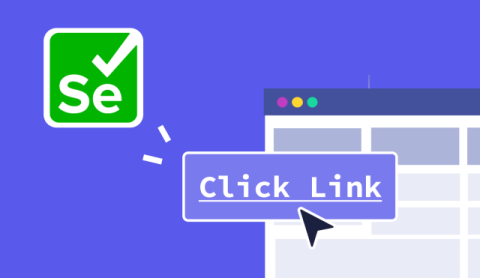
This blog provides a quick guide to find and use XPath in Selenium. XPath uses path expressions to navigate through elements, attributes, and select nodes or node-sets. The basic syntax of an XPath expression is: Xpath=//tagname. Make sure that you have installed a Selenium library. If you haven't, you can have a look at Selenium documentation for how-to guides.

Introducing KIP-848: The Next Generation of the Consumer Rebalance Protocol

The consumer group is a cornerstone of Apache Kafka, enabling scalable and fault-tolerant data consumption by allowing multiple consumer instances to share the workload of reading from topic partitions. The consumer rebalance protocol is the mechanism that coordinates which partitions are assigned to which consumers within a group.

Kong Gateway Operator 1.6: Improved Support for Konnect and AWS Transit Gateways

We're continuing our efforts to make Kong Gateway Operator (KGO) the preferred way to install, upgrade, scale, and manage a Kong Gateway or Kubernetes Ingress — whether you’re managing from Kong Konnect or Kubernetes. With this latest release, we're: As ever, we’re continuously addressing issues raised by the community. You’ll find the complete list of improvements in the KGO changelog.