Systems | Development | Analytics | API | Testing

The Complete Guide to Events Tracking In Digital Analytics

Event tracking is critical to product analytics, providing deep insights into how users interact with your product. It involves monitoring and analyzing specific actions (events) users take within your application or website. These insights are pivotal for enhancing user experience, improving product features, and driving growth.

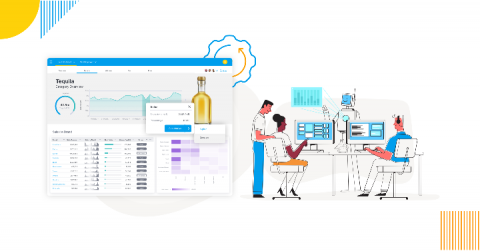
The Business Intelligence Dashboard in 2025: What Is It & How to Use

The business intelligence dashboard, also referred to as BI dashboard or business dashboard, is an important data analytics tool for aggregating, accessing and analyzing operational metrics and key performance indicators (KPIs). Business intelligence dashboards allow your organization to display its most important information on one screen, and share data and insights quickly for strategic planning and decision-making.

External IDE Connectivity: Access Spark from Your Favorite IDE with Cloudera Data Engineering

This demo showcases Cloudera Data Engineering's External IDE Connectivity, powered by the Spark Connect API. Data engineers can connect local IDEs like VS Code or Jupyter Lab to cloud clusters, run Spark workflows remotely, and sync code with GitHub. This feature enhances data engineering flexibility and productivity by streamlining CI/CD pipelines and enabling seamless synchronization between local and cloud environments, empowering downstream multi-functional analytics and AI.

Navigating the Modern Data Landscape in 2025

In this webinar, industry expert will explore the latest trends in analytics, the growing impact of AI/ML, and the role of hybrid data infrastructures in modern data management. We’ll discuss the challenges of balancing legacy systems with modern cloud solutions and provide actionable insights to help organizations future-proof their data strategies. Whether you're looking to streamline data operations, enhance analytics capabilities, or align your data investments with business goals, this session will equip you with the knowledge to stay ahead in an ever-changing data ecosystem.

Real-Time Redefined: Rethinking Kafka's Potential

When you’ve worked with data at scale, you come to appreciate the beauty and the complexity of systems like Kafka. With nearly 30 years of experience navigating the evolution of technology and data platforms, I’ve seen firsthand how Kafka has revolutionized real-time data processing - and where it can challenge even the best teams. The real question is: How do you move past those challenges to unleash everything Kafka has to offer?

Building AI Agents and Copilots with Confluent, Airy, and Apache Flink

From automating routine tasks to providing real-time insights to inform complex decisions, AI agents and copilots are poised to become an integral part of enterprise operations. At least that’s true for the organizations that can figure out how to supply large language models (LLMs) with real-time, contextualized, and trustworthy data in a secure and scalable way.

Snowflake Data Transformation: Unlocking the Power of Cloud Data Processing

In the era of cloud data platforms, Snowflake has emerged as a market leader, revolutionizing the way businesses store, process, and analyze data. However, the true value of Snowflake lies not only in its cloud data warehousing capabilities but also in its robust data transformation features. These transformations are critical for turning raw data into actionable insights, fueling data-driven decisions.

SQL for Data Engineering to Build Scalable Data Pipelines

Structured Query Language (SQL) remains the foundation of data engineering, enabling data analysts and professionals to design, build, and maintain scalable data pipelines. Despite the rise of modern technologies like Apache Spark and NoSQL databases, SQL’s declarative syntax and universal adoption make it indispensable in data engineering workflows.

A Comprehensive Guide to Enterprise Data Strategy

In today's data-driven world, a robust enterprise data strategy (EDS) is essential for organizations aiming to leverage their data assets effectively. An EDS serves as a roadmap that outlines how data will be collected, organized, processed, and utilized to support business objectives. This blog delves into the key components of an enterprise data strategy, its significance, and best practices for implementation.