50+ platform-specific questions drawn from the Databox Prompt Library, plus the framework that separates answers you can act on from answers that sound right.
Most marketing teams track traffic and leads, but rarely connect the two to understand whether their content is attracting the right audience. In this walkthrough, Rick Kranz, Director of the AI Marketing Lab, demonstrates a powerful weekly growth system that cross-references website traffic, Google Search Console data, and CRM leads to identify which content truly drives ideal customer profile (ICP) engagement.
Recently, marketing campaigns need to be evaluated on more than just final conversions. While macro-conversions, final sales, the completion of a contact form, or other actions are critical and still the most important end result, they fail to explain how any one piece of content persuades action in the interim. That's why micro-conversions are so useful. These conversions assess the various, smaller components that happen in the interim which lead to the larger conversions down the line.
Graphic design is the backbone of visual communication in today's digital and print world. It's not just about making things look pretty-it's about solving problems with design. When I first stepped into the world of design, I wasn't chasing logos or layouts. I was trying to tell stories, make people feel something, and influence how they perceived a message-all through visuals. And that's what graphic design really is: creative storytelling, powered by purpose.
Marketing should be the hub of go-to-market strategy – not the internal agency that just says “yes” to everything. But what does it take to actually shift that perception and function?
When and how content is presented where content is displayed is no longer a rules-based logical solution set in stone by developers. As more digital experiences become personalized and data-driven, companies turn to machine learning (ML) to assess on the fly the optimal solution for content presentation. Thus, with an understanding of user patterns and situational analytics, content can be delivered~at any point in time~in a more effective manner across all channels for better engagement, relevance, and efficiency.
Let’s be real—clients don’t care about how much effort you put in. They only care about results. If you’re not delivering clear, real-time performance insights with zero fluff, you risk losing their trust—and their business. That’s why a good client dashboard software is a necessity. It can take the guesswork out of reporting, and give your clients a crystal-clear view of their campaigns without endless emails or confusing spreadsheets.
In the fast-paced world of digital marketing, having the right tools to track and analyze data can make the difference between a successful campaign and one that falls flat. With an increasing number of touchpoints and channels, marketers are under constant pressure to collect meaningful insights that drive decision-making.
On the Next Do More with Qlik Tips and Tricks edition: Using Set Analysis P() to improve your marketing spend. By focusing only on those customers tied to key product purchases, you can better analyze what’s driving real revenue—and adjust your marketing budget accordingly. Target smarter, spend better.
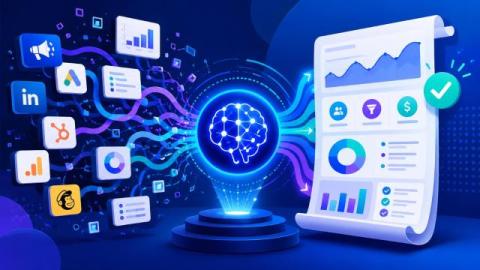
In today’s hyper-connected digital world, businesses generate vast amounts of marketing data across multiple channels, including social media, web analytics, email campaigns, CRM systems, and paid advertising platforms. Without a centralized system to collect, clean, and process this data, organizations risk missing critical insights that drive customer engagement, retention, and revenue growth.