Systems | Development | Analytics | API | Testing

Real-Time Hyper-Personalization in 2026: Architecture Guide

Hyper-personalization in 2026 is the ability to act on a user's current intent within the current session, using signals from across the journey. Batch customer data platforms (CDPs) can't do this. They can't capture intent as it forms, can't hold session state, and can't activate inside the intent window.

How to Eliminate Training-Serving Skew With a Unified Real-Time Streaming ML Pipeline (2026 Guide)

The problem. Predictive ML pipelines that maintain separate batch and streaming code paths for the same features carry training-serving skew, the gap between the features a model was trained on and the features it sees at inference time. Skew silently degrades model accuracy and doubles infrastructure cost. The recommendation. Adopt a unified streaming (kappa) architecture.

How In-House Legal Counsel Supports Faster Business Decision-Making

Speed matters in business. The ability to move quickly on contracts, partnerships, hiring decisions, and commercial opportunities can be the difference between capturing a market opportunity and watching a competitor take it. But speed without legal oversight creates a different kind of problem - the kind that shows up months later in the form of a dispute, a compliance breach, or a contract that does not say what everyone thought it said.
Sponsored Post

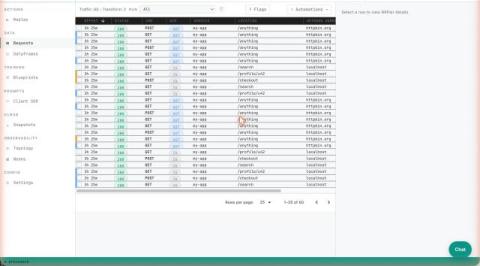
The Kubeshark Workflow That Doesn't Stop at the Dashboard

The Observability Gap shows up the moment you try to reproduce a production bug locally. Your traces tell you a request was slow. Your logs tell you which line printed. Neither tells you what was actually on the wire: the headers, the JSON body, the surprise field your client started sending last Tuesday. Until now, closing that gap meant SSHing to a node, attaching a debugger, or shipping a sidecar through change review.

Vercel AI SDK in production: when DefaultChatTransport needs a session layer

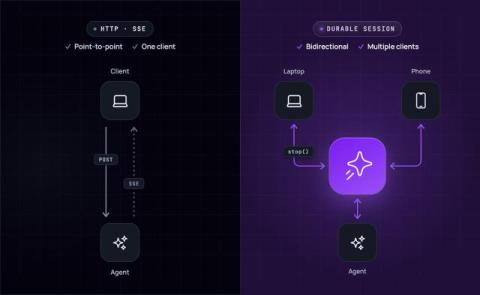
You've built an AI chat app on the Vercel AI SDK. It works in development. The model responds, the stream comes through, and the UI updates cleanly. Then you ship to production, and the transport layer starts showing its edges. Most of these failures are quiet: things that work in demos and break in ways that are hard to pin down until you know where to look. They share a common cause: DefaultChatTransport is built for HTTP, and HTTP has structural properties that some production requirements exceed.

Snowflake CoCo: Welcome to the Agentic Enterprise

When business questions move faster than answers, teams need more than dashboards. They need AI agents that can break silos, add context, and turn trusted enterprise data into action. Meet Snowflake CoCo — built to help data teams and business users move from reactive reporting to strategic action. In the Agentic Enterprise, everyone can become a strategic force, shaping what the business does next.

From Kong Konnect to Insomnia: A Developer Workflow for Testing Gateway APIs

As API ecosystems grow, developers and platform teams often work in separate environments. Platform teams manage APIs, gateways, and governance centrally, while developers recreate those configurations locally for testing and debugging. Over time, this can lead to configuration drift, inconsistent workflows, and security gaps. The release introduces our first native Kong Konnect integration, allowing developers to discover, import, and test Gateway configurations directly from Konnect.