Is agentic AI testing more hype than substance? Clarifying what this category of software testing actually is, how it works in practice, and where it still falls short.
The React Native New Architecture is no longer optional. From React Native 0.82 onwards it is mandatory, the legacy architecture is gone, and every team still running it is now carrying technical debt that will need to be resolved. For most teams, the migration conversation quickly turns to tooling. Does our CI/CD pipeline still work? Does our crash reporter still integrate correctly? Do our analytics tools need updating?
Brittle pipelines and SLA firefighting hold data teams back. Agentic data engineering introduces autonomous AI agents that detect failures, fix code, and re-run pipelines—with humans in the loop guide critical decisions. This video explains how Cloudera Data Engineering and Cloudera AI enable self-healing pipelines.
This recognition reflects the critical role automated data movement continues to play in helping organizations unify data, improve decision-making, and prepare for the future of AI.
Every QA tester knows: time is money. When something breaks on your website or web application, it can cause major issues within minutes. One way to catch those problems early is smoke testing. Smoke testing answers one practical question before your team sinks time into deeper QA: is this build stable enough to keep testing? Instead of checking every detail, a smoke test focuses on the core workflows that need to work first.
Understand what ETL is, how the ETL process works in three steps, and why data integration is essential for turning raw data into analytics-ready insights.
Performance testing is a critical safeguard for any software team, but even experienced practitioners can fall into familiar traps. Overlooked bottlenecks, missing test scenarios, or environments that don’t reflect production realities can all lead to slowdowns, user frustration, and lost business. The most damaging mistakes are often the ones that become invisible through routine or assumption.
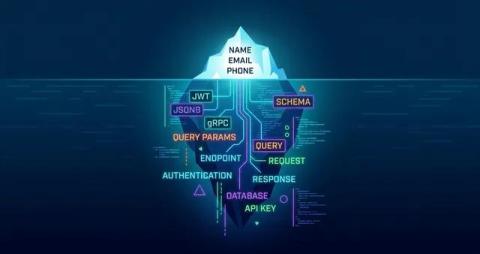
If you run a platform tools or security team, you have likely heard this request from developers: “I just need a copy of the production database for staging so I can run realistic load and integration tests.” It is a completely reasonable request. Production traffic and data contain the actual request shapes, real-world value distributions, long-tail anomalies, and timing patterns that make tests useful.
Running production LLM inference on a new accelerator family is a layered problem. The model matters. The runtime that exists for the GPU you have matters at least as much. So does the precision mode that works without losing accuracy, the inference engine that hits your throughput targets, and the secure endpoint the rest of your stack can actually call. The entire stack underneath the model is where most of the real engineering work lives and where the cost of getting it wrong shows up first.