Systems | Development | Analytics | API | Testing

Data Cleansing: The Complete Guide (Process, Techniques, Examples)

Data cleansing sits at the heart of every reliable data pipeline. Yet despite being essential to trusted analytics and decision-making, cleaning data remains one of the most time-consuming and undervalued steps in modern data workflows. With poor data quality creating significant operational challenges, getting data cleansing right has never been more critical.

Resource Planning in Power BI | Power ON Demo

See how to plan and allocate your team's resources directly inside Power BI. This demo walks through a resource management app built with Power ON from insightsoftware, where you can schedule people across projects, set rates, and track utilization against capacity without ever leaving Power BI. Power ON adds planning and write-back to Power BI, so your team can edit and save data right in a dashboard using a familiar, spreadsheet-style interface. In this walkthrough, we put those capabilities to work for resource and capacity planning.

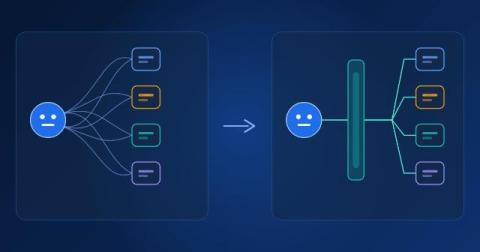
SQL-Shaped Intent: The Engineering Behind AgentQL

Our CEO recently wrote reaffirming an architectural decision ThoughtSpot made when LLMs first emerged: we do not use LLMs to directly generate SQL. My team has spent the better part of a year building AgentQL: a capability that doubles down on our decision. So let me explain what we actually built, why it doesn't just honor that architectural decision but depends on it, and the engineering choices underneath.

Saugata Saha on Data, AI, and What's Next for Qlik

Qlik CEO Saugata Saha sits down with Jessica DuBois, Senior Director of Global Tech Partners, for his first external conversation since joining the company. Saugata discusses what drew him to Qlik, the opportunity he sees at the intersection of data and AI, and why bringing increasingly capable AI together with trusted, governed data remains one of the most important challenges facing organizations today.

Ep 85 | Enterprise AI Success: What Separates Results from Expensive Experiments

Most enterprise AI use cases still aren't delivering measurable value. So what separates the projects that work from the ones that quietly disappear? For Mark Ritcey, the answer comes down to disciplined execution. AI programs need a clear business problem and an organization prepared for how the technology changes the way work gets done. In this episode of The AI Forecast, Paul Muller sits down with Mark Ritcey, Vice President of AI and Automation Delivery at Latentbridge and lecturer on AI and machine learning, to examine the decisions that shape enterprise AI success.

Owning the Agentic SDLC: How NodeSource Reclaimed Control of AI Development

TL;DR: When AI-assisted development moved from autocomplete to agentic workflows, the bottleneck for our engineering velocity stopped being the model and started being the vendor. Owning our own orchestration layer, running the same upstream agent stack across multiple developer surfaces, wrapping every change in a version-controlled spec, and treating the agent calls themselves as first-class telemetry is what made spec-driven development practical for us at NodeSource.

Saugata Saha on Data, AI, and What's Next for Qlik

Qlik’s new CEO discusses why he joined the company, the opportunity he sees at the intersection of data and AI, and what customers and partners can expect from his leadership. Qlik CEO Saugata Saha recently sat down with Jessica Dubois, Senior Director of Global Tech Partners, for his first external conversation since joining the company.

Why performance validation is an infrastructure issue, too

At Datadog DASH in the spring, the Tricentis NeoLoad team met folks in all types of roles – developers, test engineers, CoE leads, and SREs – and one recurring theme we found was that SREs often didn’t know much about how performance validation happens at their companies. That’s a fair division of labor. Seemingly, the performance team’s work would be related but not mission-critical to the infrastructure team’s. But that’s not entirely true.

Cloud-Based vs On-Premise Website Monitoring: Which Approach Wins in 2026?

Website monitoring often feels like choosing between casting a net or wielding a spear. Cloud-based monitoring is your fishing net: you deploy it broadly, covering vast swaths of digital water, capturing issues wherever they occur. It’s automated, relentless, and covers every corner of your online presence, from global uptime to minute performance blips. On the other hand, on-premise monitoring is the spear – deliberate, targeted, and controlled.