
Systems | Development | Analytics | API | Testing

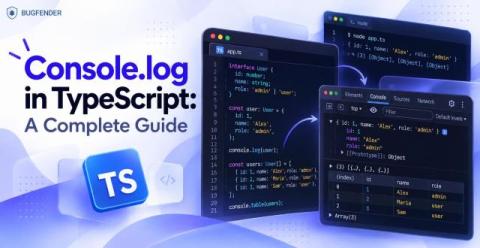
Console.log in TypeScript: A Complete Guide

console.log() in TypeScript allows us to print values to the browser console or terminal, so we can inspect our code while it runs. However, the workflow can take some getting used to: in most projects, TypeScript is compiled into JavaScript, which is then executed by a JavaScript runtime. Whether you’re debugging a React component, a Node.js script or a backend application, it’ll get easier once you’re familiar with these nuances.


How Cloudera AI Agents Automate Retail Product Onboarding

Retail merchandising teams spend countess manual hours evaluating new product submissions—crunching revenue models, analyzing sales cannibalization, and writing supplier rejection emails. Powered by *Cloudera AI agents* , this video demonstrates how retailers can transform that tedious, bottlenecked onboarding workflow into a seamless, automated process. As soon as a new product is submitted, autonomous background agents map it against existing inventory, evaluate growth risks, assess market saturation, and highlight specific low-performing SKUs to replace.

Custom Exceptions in Ruby: Classes, Messages & Hierarchies

To create a custom exception in Ruby, define a class that inherits from StandardError: class PaymentError < StandardError; end. Raise it with raise PaymentError, "card declined" and rescue it by class. Inherit from StandardError, not Exception, so a bare rescue still catches it. Pass a default message by overriding initialize and calling super. Ruby’s built-in exception classes describe the language’s failure modes, not your application’s.

Catch bugs and UI issues automatically with QA agents | SmartBear BearQ

In this video, you’ll see how SmartBear BearQ's QA agents catch bugs, UI and UX issues, and accessibility gaps automatically as they explore or test your applications, zero test script writing necessary. Whenever the Explorer Agent investigates your app or the Tester Agent runs a test, the QA Lead Agent is watching in the background for anything that looks wrong. Each suspected issue arrives with a clear title, a description, expected versus actual behavior, steps to reproduce, and a link to the evidence that shows exactly when it was found.

Why testing Oracle Fusion Agentic Applications is different - and how QA teams can adapt

Oracle’s Fusion Agentic Applications represent a new class of enterprise software. They contain coordinated teams of outcome-driven, proactive AI agents that are engineered to execute business processes across finance, HR, supply chain, and customer experience. For folks who work in those departments, these agents may streamline some of their daily work and help uplevel employees. For testers, they bring a measure of ambiguity. In general, you know how humans use these applications.