Systems | Development | Analytics | API | Testing

How To Use Copilot In Software Testing: A Practical Guide For Testers

Software testing is critical in assessing the quality of apps, testers oftentimes have to deal with limited resources when it comes to creating tests, as well as repetitively creating tests for all feature coverage. These factors lead to a significant reduction in both the speed of development and efficiency in the testing process.

Tableau MCP vs. Databox MCP: Enterprise Control vs. AI-Native Speed

The Model Context Protocol (MCP) is reshaping business intelligence. It provides the technical standard for a new class of generative BI tools that let you talk to your data. The engine behind this revolution is the MCP server—the essential component that connects AI models (like Claude or Cursor) to a company’s data. This article examines Tableau’s official MCP server vs. Databox MCP to help you decide between a traditional BI add-on and an AI-native headless platform.

Activation is broken: why most SaaS teams get it wrong and how to fix it

If activation feels fuzzy in your company, you’re not alone. In fact, Rodrigo Fernandez has seen the same pattern across hundreds of SaaS businesses: growth teams get handed “increase activation,” but no one actually owns what activation means, how it’s defined, or how it’s measured. And when activation isn’t owned, it becomes a committee decision. It turns into noise. And your product data stops being useful.

From "What Happened?" to "Why?" - AI Analytics Built for Marketers | Spotter

Are your marketing dashboards telling you what happened—but never why? Campaigns are underperforming, budgets are under scrutiny, and every answer seems to require a ticket to the data team. ThoughtSpot CMO, Micheline Nijmeh, just went hands-on with Spotter—the AI analyst built for marketers who need answers now, not next sprint. Spotter doesn’t just chat. It investigates your toughest marketing questions so you can move from guesswork to confidence: Why did pipeline drop this week?

Leveraging ThoughtSpot for Managing Complex Joins

Stop manually wrangling data and start automating your governance. In this technical deep-dive, we explore how to leverage ThoughtSpot Modeling Language (TML) to manage complex joins and enforce strict business rules at the architectural level. Traditional UI joins are great, but sometimes you need to ensure end-users only interact with a specific subset of data—like active subscribers—without giving them the ability to toggle filters. By moving your logic into TML, you create a "Join with Filters" that hardcodes business rules directly into your data model.

Realtime steering: interrupt, barge-in, redirect, and guide the AI

Start typing, change your mind, redirect the AI mid-response. It just works. That is the promise of realtime steering. Users expect to interrupt an answer, correct its direction, or inject new instructions on the fly without losing context or restarting the session. It feels simple, but delivering it requires low-latency control signals, reliable cancellation, and shared conversational state that survives disconnects and device switches.

Age of Agents and Access Management | WSO2 Technology Conference 2026

“Agentic” is the defining word of 2026. While Large Language Models (LLMs) serve as the brain , AI Agents are the limbs —entities that take action, interact with real systems, and make autonomous decisions. In this deep-dive session from the WSO2 2026 Technology Conference, Ayesha Dissanayaka from the WSO2 Identity & Access Management (IAM) team demystifies what truly makes an AI agent—and tackles the most critical enterprise challenge.

Moving Our Observability Data Collector from Sidecars to eBPF

For years, the Kubernetes sidecar pattern has been a practical way to capture observability data. Running a collector alongside each application pod gave us deep visibility into traffic, including full request and response payloads across supported protocols. However, as cloud-native environments have grown more complex, the limitations of sidecars—such as resource overhead, operational complexity, and scaling challenges—have become more apparent.
Sponsored Post

Peeking Under the Hood with Claude Code

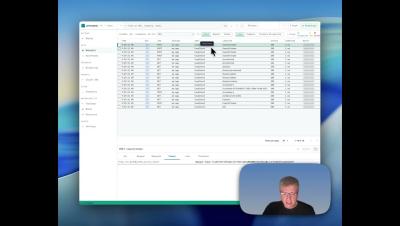
Claude is one of the go-to AI-native code editors for developers. Because it's a simple chatbot interface housed inside a familiar CLI, it provides a pretty smooth path between traditional IDEs and agentic AI. But what's actually happening behind the scenes when you ask it to write code, generate a test, or debug an issue? Who and what is it talking to behind the scenes? Can I prevent data leakage or do I need to add another layer to my tin foil hat? To answer these questions, I used proxymock to inspect the network traffic flowing from the Claude IDE.