Systems | Development | Analytics | API | Testing

From Chatbot to Compound AI System: Infrastructure Patterns for Multi-Model, Tool-Using Applications

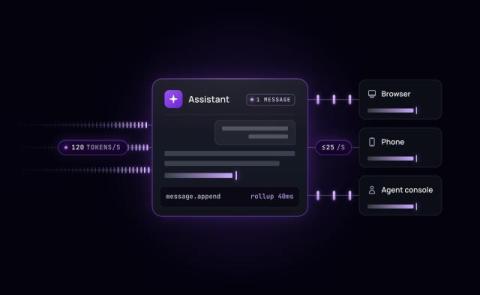
Two years ago, GenAI in production usually meant a single LLM serving a single endpoint. In 2026, it usually means much more. The applications shipping in front of users today are compound AI systems: orchestrated pipelines of retrievers, embedders, dialogue models, classifiers, code interpreters, SQL executors, and tools, with a single user request fanning out to several model calls across the stack.

Citation X for Time-Sensitive Travel: Speed, Range, and Cabin Experience

For executives, professional teams, and private travelers working within demanding schedules, the value of an aircraft is measured by more than cabin size. Flight speed, route capability, airport access, baggage capacity, and the ability to remain productive in the air all influence whether the aircraft is suitable for the mission.

Migrating a LoadRunner Script to OctoPerf With an AI Agent

A VuGen script is C. Some scripts are a recorded journey with helpers around it, others are a framework that happens to send a few requests. OctoPerf 17 ships a LoadRunner migration playbook for AI agents whose first job is to tell you which one you have. Real prompts, real output, script downloadable. Target: JPetStore, our public MyBatis demo shop. Every step is reproducible. One Action.c, HTTP recording level, eight transactions walking a purchase. Around them: It replays green in VuGen.

The AI Code Verification Crisis: Meet AURA, the Platform Built to Solve It

AI didn't remove the release bottleneck, it moved it downstream. Code volume exploded, verification didn't. The old QA model isn't broken, it's outgrown: 80% of engineering teams have already traced a production incident to AI-generated code. AURA is Sauce Labs' answer, the only full-lifecycle release assurance platform built to close the gap. It continuously verifies every release against business intent, authoring, running, and regenerating tests in an autonomous learning loop, with humans in control.

Customer Service AI Orchestration: Smart Intake Isn't Enough

Customer service AI orchestration connects AI-driven intake to the backend systems and people who actually resolve a request, not just the chatbot that receives it. Every request should trigger an end-to-end resolution, not stop at an automated response. The real challenge with AI in customer service isn’t adoption; it’s fragmentation.

One Business Entity, Multiple Definitions: The Architecture Flaw That Slows PropTech Platforms

A platform can connect a dozen systems and still behave as if it connects none of them. The listings service reports one count of active properties, the analytics dashboard reports another, and finance keeps a third in a spreadsheet. Each number is correct inside its own system. None of them agrees, because every system carries its own definition of a Listing, a Property, and an Agent. This is usually diagnosed as an integration problem, so teams add another connector.