

Systems | Development | Analytics | API | Testing

MLS Data Quality: 10 Problems That Break Real Estate Products at Scale

A single Multiple Listing Service (MLS) record rarely stays in one place. The same listing feeds the search index, the map, the detail page, analytics, and the public API, so one incorrect value can propagate to multiple downstream surfaces that consume the same source data. A correction made in one system does not necessarily propagate to every downstream surface that consumed the original value.

Optimize Database Connection Pools for Peak Performance

When scaling an application to handle higher traffic, performance stalls or database errors often trace back to database connection pools running on default or generic settings that buckle under real-world load. The result? Connection timeouts, resource exhaustion, and users facing delays while the backend struggles. Establishing a new database connection can take 50 to 100 milliseconds per request, and multiplying that overhead by thousands of concurrent users can overwhelm infrastructure.

HTTP/3 Load Testing: Cloud Practices in 2026

HTTP/3 load testing requires more than updating legacy scripts. The move from TCP to UDP-based QUIC changes how traffic is generated and validated. Many popular tools, such as k6, default to older protocols unless HTTP/3 is specifically negotiated and confirmed. To avoid testing fallback scenarios, pair your application-level load tests with QUIC-aware validation.

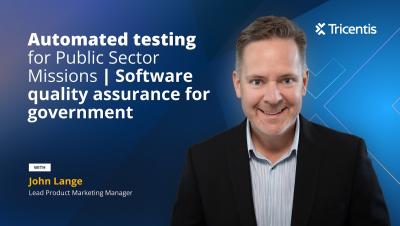
Automated Testing for Public Sector Missions | Software Quality Assurance for Government

Budgets are tight, AI is changing how software gets built, and citizens expect the same digital experience they get from their favorite online brands. One missed bug can put your mission and constituent trust at risk. In this video, John explains how public sector agencies can close the gap between speed and safety with automated software quality assurance. You'll see how the Tricentis platform helps teams decide what to test, manage testing in one place, automate end-to-end processes, and make sure systems perform under heavy load.

Introducing the Three-Layer Model for Intelligent Products

On a recent All-In podcast episode, David Friedberg described how his team at plant-breeding company Ohalo Genetics spent a weekend building an internal CRM using Claude Code, Cursor, and a handful of other AI coding tools. They stood it up, started using it, and it worked. Then the requests started. Can you add this feature? Can it sync with the tools we already use? What about access controls and data security?

Open Data Infrastructure in the age of AI agents

Fivetran + dbt Labs CEO George Fraser and Fivetran + dbt Labs President Tristan Handy sit down with Andreessen Horowitz general partner Martin Casado, one of the leading investors in software and AI infrastructure, to talk about Open Data Infrastructure in the AI era. Martin and his team have invested in dbt, Fivetran, Tabular, Cursor, OpenRouter, and many other companies.

Webinar Recap: Run Playwright Tests in the Cloud and Report Every Result with Katalon True

Playwright test suites can remain unchanged while reporting results alongside Katalon Studio and manual testing activities in a centralized platform. This was the focus of the webinar Bring Playwright into Katalon True, delivered in two sessions on October 14, 2026. The webinar focused on how Playwright integrates into a broader testing workflow rather than comparing Playwright with Katalon. Playwright is a free, code-first framework for browser automation that many teams already use.

Intelligent Document Processing Platform: 4 Must-Have Features for 2027

An intelligent document processing (IDP) platform uses AI technologies to automatically capture, classify, extract, validate, and route data from unstructured documents such as invoices, contracts, emails, PDFs, or even hand-written scans. As organizations continue to adopt AI into their daily workstreams, IDP is on track to shift from a back-office efficiency tool to a core component of enterprise AI automation.

Appian Q3 Release Highlights: AI Speed Meets Enterprise Controls

AI is evolving faster than organizations can keep up, and often it’s the most important operations that fall the furthest behind. That’s exactly why Appian is focused on AI for complex, enterprise-grade processes—to make applying AI automation to important work easy. Over the last quarter, Appian has continued to invest in capabilities that help you deploy AI fast without sacrificing control: Over 80% of developers regularly use AI coding tools.