Systems | Development | Analytics | API | Testing

Swagger Meeting You Where You Work

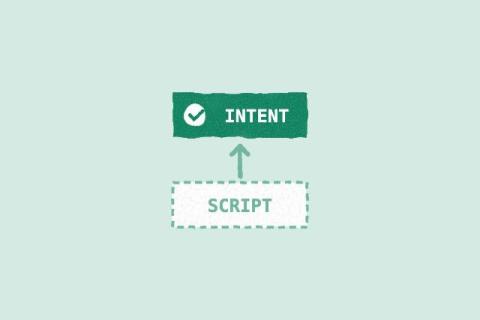
Some approaches to API governance interrupt developers mid-flow, forcing them to context-switch into a separate tool and manually verify their API definition before they can ship. That approach has never really worked. Not because developers don’t care about quality, they do, but because the best time to fix an API is the moment you’re already thinking about it. That’s what has always guided how Swagger grows. Not “come to us.” But “we’ll be there.”

The Three Pillars Were Built for Humans

It was 2am and I was paying for the privilege. Something was on fire in production, and I’d done the modern thing: I pointed an AI agent at it. It ingested the dashboards. It read the logs. It walked the traces. Then it handed me back a beautifully formatted paragraph that said, in effect, “latency is elevated on the checkout path.” I knew that. The page told me that.

Foundation First: Why Model-Agnostic Data Platforms Win

In 2024, two of the largest data platform companies, each with billions in revenue and dedicated AI research teams, invested in building their own foundation models. One spent roughly $10 million training a 132-billion parameter model on 3,072 NVIDIA H100 GPUs. The other released a 480-billion parameter model optimized for enterprise tasks like SQL generation and code. Both achieved strong results within their compute class.

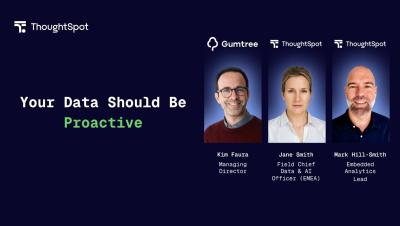
ThoughtSpot June Release: Customize Your Agent

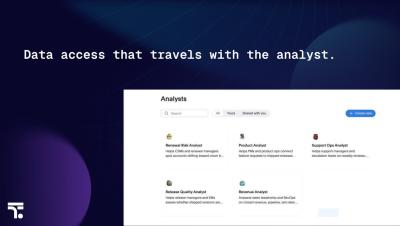
Check out what’s new in ThoughtSpot’s latest release! SpotterModel gets smarter: Build complex data models with AI formula suggestions and instant version rollbacks if you make a mistake. No stress, no lost work. Spotter Instructions: Fully customize Spotter’s persona, formatting rules, and strict guardrails. It says exactly what you want it to say—and nothing it shouldn't. Ad Hoc Analysis: Drop local files directly into Spotter for instant answers, or blend them safely with your governed enterprise data.

Stop testing everything: How Tricentis SeaLights tells you exactly what to test

Most teams don't know which parts of their code have actually been tested, and which haven't. That gap is where defects escape. Tricentis SeaLights is a quality intelligence platform that gives engineering and QA teams real-time visibility into test coverage. It maps every code change to the tests that cover it, surfaces exactly what's tested and what isn't, and recommends which tests to run and which to skip across unit, regression, integration, manual, and end-to-end tests.