Systems | Development | Analytics | API | Testing

QMetry vs. OpenText ALM: Why QMetry is the better choice for regulated QA

Regulated QA teams carry a pressure most testing platforms weren’t built to solve for at the same time. Every release still needs traceability from requirement to test case to defect that holds up under audit. Approvals and evidence still need to be airtight. At the same time, agile releases, DevOps pipelines, and AI-assisted development keep moving, whether or not the testing platform underneath has kept pace.

From Chatbot to Compound AI System: Infrastructure Patterns for Multi-Model, Tool-Using Applications

Two years ago, GenAI in production usually meant a single LLM serving a single endpoint. In 2026, it usually means much more. The applications shipping in front of users today are compound AI systems: orchestrated pipelines of retrievers, embedders, dialogue models, classifiers, code interpreters, SQL executors, and tools, with a single user request fanning out to several model calls across the stack.

Citation X for Time-Sensitive Travel: Speed, Range, and Cabin Experience

For executives, professional teams, and private travelers working within demanding schedules, the value of an aircraft is measured by more than cabin size. Flight speed, route capability, airport access, baggage capacity, and the ability to remain productive in the air all influence whether the aircraft is suitable for the mission.

I built an API traffic classifier for business workflows

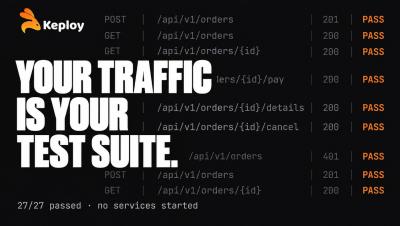
An engineering leader asked me a question a few weeks ago: could we read their business workflows out of API traffic instead of asking people to document them? I said it should be possible. Then I tried it. A few engineers know how the system really works. They know which calls make up a work order and which checks happen after a write. That stuff rarely makes it into the test plan. Usually it’s in somebody’s head. Sometimes it’s in several heads, with slightly different answers.

Agentic QA demo: Stop fixing broken test scripts

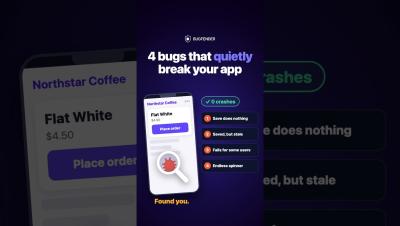
See agentic testing in action with SmartBear BearQ. BearQ uses autonomous agents to explore your application, uncover defects, create regression tests, and adapt testing as your product changes – with human oversight built into the process. Broken, flaky test scripts eat up hours every sprint – and still leave gaps in coverage. SmartBear BearQ replaces constant script maintenance with agentic QA, so testing can move beyond predefined paths without giving up human oversight.

Migrating a LoadRunner Script to OctoPerf With an AI Agent

A VuGen script is C. Some scripts are a recorded journey with helpers around it, others are a framework that happens to send a few requests. OctoPerf 17 ships a LoadRunner migration playbook for AI agents whose first job is to tell you which one you have. Real prompts, real output, script downloadable. Target: JPetStore, our public MyBatis demo shop. Every step is reproducible. One Action.c, HTTP recording level, eight transactions walking a purchase. Around them: It replays green in VuGen.

The AI Code Verification Crisis: Meet AURA, the Platform Built to Solve It

AI didn't remove the release bottleneck, it moved it downstream. Code volume exploded, verification didn't. The old QA model isn't broken, it's outgrown: 80% of engineering teams have already traced a production incident to AI-generated code. AURA is Sauce Labs' answer, the only full-lifecycle release assurance platform built to close the gap. It continuously verifies every release against business intent, authoring, running, and regenerating tests in an autonomous learning loop, with humans in control.