Systems | Development | Analytics | API | Testing

Modern Software Development For Today's Systems & Applications



5 Reasons dbt Wizard transforms your partner practice
dbt Wizard brings conversational AI to analytics and context engineering, grounded in your dbt project’s lineage, compiled state, tests, and semantics.

Guide to Load Testing Microservices Architectures in Cloud Environments (2026 Edition)
Misconceptions about microservices load testing are common, especially for teams moving from monolithic systems. It’s tempting to believe that simply scaling infrastructure or running legacy load tests will reveal the same issues and provide actionable results. However, distributed, cloud-native architectures introduce new complexities and risks that demand a different approach.
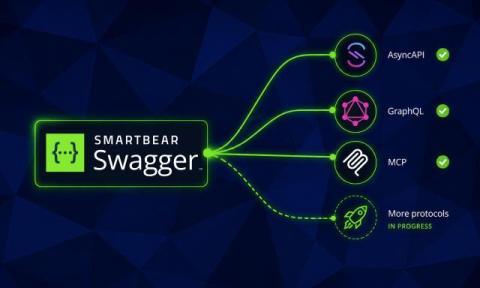
Reduce API governance fragmentation with SmartBear Swagger, now fluent in multiple protocols
Design, document, and verify APIs across OpenAPI, AsyncAPI, GraphQL, and MCP. gRPC and A2A support coming soon.

The Times They Are A-Changin' - Just Not on SAP's Terms
Bob Dylan wrote those words in 1964 about a world in flux - where the old rules were being quietly rewritten, and the people who hadn't noticed yet were about to find out the hard way. He wasn't thinking about enterprise data architecture. But if you've been following SAP's moves on data access, extraction, and platform strategy over the past two years, those words might be landing a little closer to home than usual.
The Architecture Decision Your Multi-Agent System Will Live With
Most teams building multi-agent systems hit the same wall at roughly the same point. The prototype works. Agents chain together, tasks complete, the demo impresses the room. Then someone asks: "What happens when this runs a thousand times a day? What happens when an agent calls an external API that's down? How do we know what the agents actually did?" That's when the architecture conversation starts. Here's the framing that clarifies most of these questions.

Cloudera Partner Ecosystem: Simplifying Data & AI Across Hybrid Environments
Something major is coming for our customers and partners... Michelle Hoover shares how Cloudera and our partner ecosystem are helping simplify data and AI across environments while driving stronger business value and outcomes. What You'll Learn.

What is Application Security Audit and Why It's Important for Your Business
A real estate listing platform runs on more moving parts than it looks like from the front end: multiple user roles, MLS and payment integrations, document storage, and a database full of PII and deal terms. Every one of those is part of the attack surface. An application security audit maps that surface. It is a structured evaluation of your application’s code, configuration, and infrastructure that identifies vulnerabilities and weak controls, then ranks them by the risk they actually carry.

AI Chatbots Need Accessibility Testing Too
AI chatbots are transforming how people interact with digital products, but they also introduce new accessibility challenges.

Observe Opaque Services With OpenTelemetry eBPF + proxymock
Every SRE team operates services it cannot see into: a vendor binary, an inherited legacy deployment, a container whose owning team dissolved two reorgs ago. The routes are undocumented, the dependencies are unknown, and when a request takes 130 milliseconds nobody can say whether that time is application work or a wait across a network boundary.