Systems | Development | Analytics | API | Testing

Build Your Own Internal RAG Agent with Kong AI Gateway

RAG (Retrieval-Augmented Generation) is not a new concept in AI, and unsurprisingly, when talking to companies, everyone seems to have their own interpretation of how to implement it. So, let’s start with a refresher. RAG (short for Retrieval-Augmented Generation) is a technique that injects relevant data from an external knowledge source directly into a prompt before sending it to a Large Language Model (LLM). “But wait, my model is already fine-tuned on my domain-specific data.

Why API-First Matters in an AI-Driven World

APIs have long been the backbone of modern software systems, architectures, and businesses. They now dominate the web, accounting for 71% of all internet traffic. Generative AI is accelerating this trend especially as we pivot our interaction with common web-based capabilities, like “search” in favour of AI-enriched variants. More AI leads to more APIs, and with that, APIs act as an important mechanism to move data into and out of AI applications, AI agents, and Large Language Models (LLMs).

Bridging SQL and Vector DBs: Unified Data AI Gateways for Hybrid AI Stacks

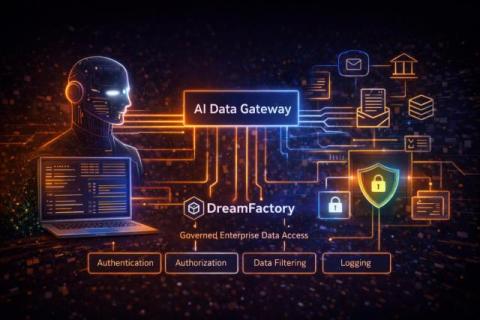
AI systems need both structured data (like spreadsheets) and unstructured data (like images or text). SQL databases excel at structured data, while vector databases handle unstructured data for tasks like similarity searches. The solution? Hybrid AI stacks that combine both through unified Data AI Gateways.

Ep 30 | Redefining Learning: The Future of K-12 Education and AI with Marlee Strawn

It’s official. AI has reached the classrooms, but not without pushback and hesitancy. Marlee Strawn, co-founder of Scholar Education, joins The AI Forecast to discuss. Marlee’s years of experience in education—both as a teacher and school administrator—ground her strong perspective that AI won’t replace teachers or make students “dumber.” Tune in as Marlee and host Paul Muller delve into the significance of personalized learning through AI, the varying impacts across different education levels, and the ethical considerations surrounding AI deployment in classrooms.

From dashboards to decisions: Redefining data democratization and AI readiness

In this episode, Fivetran speaks with Paul Bruffett, VP of Enterprise Data & Analytics at Out of the Box Brands, to explore how organizations can truly democratize data, embed AI into everyday decisions, and prepare for a more digital, personalized future. From empowering teams with real-time insights to rethinking how generative AI fits into reporting and retail, Bruffett shares what it takes to build a data strategy that delivers value at every level of the business.

Blueprint for Enterprise GenAI: Governance, Gateways, and Guardrails

Generative AI is transforming how businesses operate, with 74% of enterprises already deploying it in production by 2025. The technology offers measurable benefits like a 1.7x ROI and cost reductions of 26–31% in key areas like supply chain and customer operations. But with rapid adoption comes serious risks - data breaches, AI bias, and compliance issues are top concerns.

Understanding The Differences Between Windsurf And Cursorai

In 2025, AI-powered coding platforms have rapidly moved from "nice to have " to an important part of modern developers. The tools that caught everyone’s attention in these are Windsurf and Cursor. It is hard to choose between the Windsurf vs cursor – they are mostly similar. They are both IDEs (integrated development environments) which are mostly developed for the vibe coders, i.e. non non-coders who build apps for fun and work.

AI Gateway Benchmark: Kong AI Gateway, Portkey, and LiteLLM

In February 2024, Kong became the first API platform to launch a dedicated AI gateway, designed to bring production-grade performance, observability, and policy enforcement to GenAI workloads. At its core, Kong’s AI Gateway provides a universal API to enable platform teams to centrally secure and govern traffic to LLMs, AI agents, and MCP servers. Additionally, as AI adoption in your organization begins to skyrocket, so do AI usage costs.