Systems | Development | Analytics | API | Testing

Government API Use Case: How to quickly connect your application with Data.

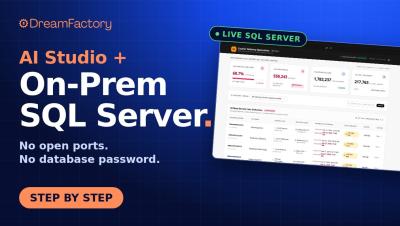
Getting data out of source systems and into the applications that need it is usually slow, custom, and hard to secure. Today I'll show you how DreamFactory solves that as a secure data gateway. This demo today is based on a government healthcare use case.

BigQuery to REST API in 2 Minutes | DreamFactory

Turn a Google BigQuery project into a secured REST API without putting the warehouse credential in your app. DreamFactory stores the service account. Your app calls a URL with an API key. Role-based access control decides what that key can see. Docs are generated from the live spec, so fields and filters become query parameters you can ship. In this walkthrough.

Chaos Monkey Won't Find Your Bug

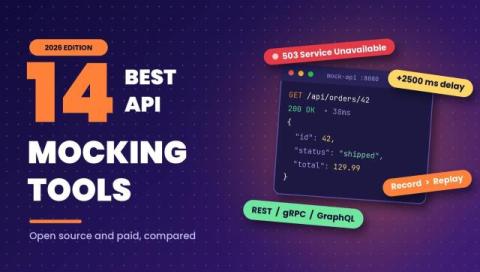
We shipped a chaos feature that never caused any chaos. Our mock server has had a fault-injection effect for years with a straightforward job: withhold the response entirely and see whether the caller copes. Last week I audited it against the actual code path. It had never withheld anything. The handler returned early without writing a response. Go’s net/http then did what it is designed to do, which is synthesize a 200 OK and flush the recorded body.

SmartBear MCP for Zephyr: Connect your testing system of record to your AI tools

Your SmartBear Zephyr test data holds the answers you need before you ship: what’s covered, what passed, where the risk sits. That data has always lived one context switch away, behind the Jira UI. The SmartBear MCP Server changes that. It brings your Zephyr test data into any MCP-compatible AI client, so quality keeps pace with how fast your team builds. This guide covers where testing sits in the AI age, what MCP is, and how it unifies data visibility within your Zephyr workflow.

QMetry vs. TestRail: Which is better for enterprise QA teams?

Choosing an enterprise test management platform is an architecture decision, not just a feature checklist. That choice comes down to how the platform stores data, how deeply testing connects to development, how far reporting and traceability extend, and how much the platform can absorb as testing volume, automation, and compliance requirements grow.

QA Testing Tools: The Best Options By Category (2026)

QA testing tools have never been more varied, and more confusing to choose between. In 2026, the category spans unit testing frameworks, API automation platforms, AI-powered self-healing test suites, and everything in between. Most teams don’t need one tool. They need a stack of three to five that cover different parts of the delivery cycle. The challenge isn’t finding tools.

Synthetic Monitoring Is Broken. Your Production Traffic Can Fix It.

Synthetic monitoring has been a critical part of application reliability for years. It gives engineering and operations teams a way to proactively test applications, APIs, and critical customer journeys before users encounter problems. But there is a fundamental limitation with the traditional approach: Someone has to create the tests. As applications become more distributed and customer journeys become more complex, organizations can end up maintaining hundreds or even thousands of synthetic scripts.