Systems | Development | Analytics | API | Testing

Accelerating Releases with Quality: Contract Testing vs. E2E Functional Testing

Good API testing should give developers confidence that services will run and perform as expected in production. But how much contract testing vs. E2E functional testing is really needed for quality at speed? This blog was first published on September 9th, 2021. It has been updated with the most current information.

How To Create Company Sample Rate Rules | Dynamic Sampling | Moesif in 100 Seconds

Dynamic sampling enables you to control which API calls are logged to Moesif based on customer or API behavior. This video will show you how to create sampling rules specific to a company within Moesif. Dynamic sampling is a fantastic cost-savings feature available to customers on our Enterprise plan. Moesif will intelligently extrapolate metrics for accurate reporting even with multiple sample rates in place. That means that no matter what rules or sample rates you have set up you can be sure you are still seeing an accurate representation of your data.

The Power of Event-Driven Architecture | Chris Parlette | TriggerMesh | Kongcast Episode 19

In this episode of Kongcast, Kaitlyn talks with Chris Parlette, Senior Solutions Architect at TriggerMesh about the evolution of microservices and event-driven architecture, who can benefit most from organizational future-proofing and modernization, and TriggerMesh as an event-driven integration platform.

How To Create User Sample Rate Rules | Dynamic Sampling | Moesif in 100 Seconds

Dynamic sampling enables you to control which API calls are logged to Moesif based on customer or API behavior. This video will show you how to create sampling rules specific to a user within Moesif. Dynamic sampling is a fantastic cost-savings feature available to customers on our Enterprise plan. Moesif will intelligently extrapolate metrics for accurate reporting even with multiple sample rates in place. That means that no matter what rules or sample rates you have set up you can be sure you are still seeing an accurate representation of your data.

Top 7 API Analytics Tools for Your Business

APIs are basically pieces of code that help with task performance for the vast majority of businesses. An organization can accomplish data interoperability between various applications with the use of an API analytics tool. If you're a part of the API economy and want to start using APIs as a source of revenue or growth in today's hyper-connected world, you need to manage APIs with more finesse.

Microservice Architecture and graphQL s2

GraphQL possesses a lot of potential and is also gaining so popularity these days. But it's application in the relation to microservices is quite affectionate. So, let's see how can we use GraphQL for microservices? Apart, from this you will also get to know what GraphQL and microservices is all about. We request you keep watching the video till end if you really want to gain worthy insights over GraphQL and Microservices.

How DreamFactory Can Help You Reduce API Bottlenecks

If you’ve been using APIs for a while, you know that reducing API bottlenecks is important to ensure optimal user experience. API bottlenecks can cause your system to grind to a halt, resulting in lost sales and unhappy customers. However, powerful open-source software that provides a complete REST API for your JavaScript, Python, or PHP applications can help you avoid this fate. The solution to prevent these bottlenecks relies on the developer platform you decide to use.

6 Best Practices for Productizing APIs

Web APIs are an integral piece of the development landscape today. According to a 2021 survey, top industries such as Digital Banking, Retail, and Financial services have experienced significant year-on-year API traffic growth with 70%, 51% and 50% increases since February 2021, respectively. The economic impact of APIs is significant and vast. Recent funding rounds of API-focused companies have seen millions of dollars go to companies precisely because APIs appeal to developers.

What is the API Economy?

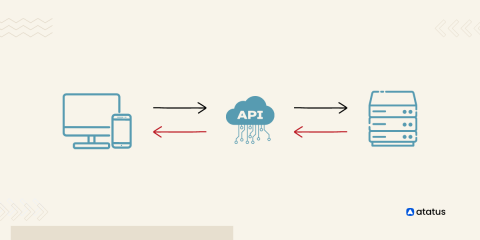
Today’s digital economy is shifting toward dependence on microservices — self-contained and reusable software components — working in coordination to compose the applications we use. Communication between microservices happens through the API (or application programming interface). Using APIs (which are like pieces of software that let applications communicate with each other) is how microservices expose their functionalities and allow access to their services and their data.