Businesses today have a growing demand for real-time data integration, analysis, and action. More often than not, the valuable data driving these actions—transactional and operational data—is stored either on-prem or in public clouds in traditional relational databases that aren’t suitable for continuous analytics.
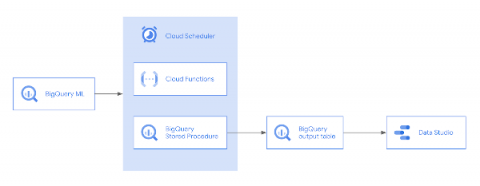
Continuous evaluation—the process of ensuring a production machine learning model is still performing well on new data—is an essential part in any ML workflow. Performing continuous evaluation can help you catch model drift, a phenomenon that occurs when the data used to train your model no longer reflects the current environment.
COVID-19 vaccines from various manufacturers are being approved by more countries, but that doesn’t mean that they will be available at your local pharmacy or mass vaccination centers anytime soon. Creating, scaling-up and manufacturing the vaccine is just the first step, now the world needs to coordinate an incredible and complex supply chain system to deliver more vaccines to more places than ever before.
Innovative organizations need DataOps and new technologies because old-school data integration is no longer sufficient. The traditional approach creates monolithic, set-in-concrete data pipelines that can’t convert data into insights quickly enough to keep pace with business. The following trends are driving the adoption of Hitachi’s Lumada DataOps Suite.
Thanks for all those who enthusiastically responded to my first blog post on Qlik analytics with Peloton! Now, onward brave souls as we learn HOW I was able to create the analytics I wrote about earlier!
In the previous posts in this series, we have discussed Kerberos, LDAP and PAM authentication for Kafka. In this post we will look into how to configure a Kafka cluster and client to use a TLS client authentication. The examples shown here will highlight the authentication-related properties in bold font to differentiate them from other required security properties, as in the example below. TLS is assumed to be enabled for the Apache Kafka cluster, as it should be for every secure cluster.
One of the key pieces of work that we've done this past year is to actually build a completely bespoke application, so that we could properly look at the different ways that we could embed Yellowfin. This has helped us create a really unique customer experience within a third-party application. Like all great stories, our vision fundamentally changed on that journey, and we learned three valuable lessons as we built this application we want to share with you.
As a result of overwhelming excitement (and pressure) from my fellow Qlikkies, I’m going to share with you the recent demo I did at our all-company annual kick-off which shows Active Intelligence in action. It was intended to be an “internal-only” demo because it mixes existing capabilities with near-term future ones, but, on reflection, I think you, too, will be just as excited.