Frank Leymann is Named First WSO2 Technology Fellow
WSO2's highest technical rank recognises Frank Leymann for his extensive software innovations and their global impact.


One of the most common operations in Python is splitting strings into lists based on a specified delimiter. However, when using split(), you may encounter the error List Index Out of Range. This guide will unpack what this error means, why it occurs, and some common strategies to prevent it.
Intelligent process automation (IPA) isn’t for everyone. Let me explain. Intelligent process automation is meant for large-scale digital transformations. So if you're looking to make small changes at the margins, like automating simple tasks, IPA probably isn't for you. IPA is better suited to large organizations with lots of data that want to streamline complex, enterprise-wide processes—to digitally transform their workflows, top to bottom.
Google the topic of artificial intelligence, and you’re likely to be taken down a deep, winding rabbit hole. If you venture only a little under the surface, you will encounter fantastical terms like perceptron, sigmoid neuron, and nonlinearly separable classifications. To save you from falling into that hole, this article will give a short, clear explanation of AI vs. generative AI.
We are excited to release Serverless Observability for N|Solid with support for AWS Lambda. With the growth of organizations leveraging serverless increasing as they realize the performance and cost benefits, we're excited to provide customers with this new visibility into the health and performance of their Node.js apps utilizing Serverless Functions utilizing serverless architectures. Img 1. Serverless Cloud Providers.
Bitrise has introduced a new feature that allows you to connect to your code repositories using a private link, simplifying the way you build apps. With this update, you have more control and security, and the process is quicker and less complicated, making managing workflows easier.
Do you aspire to create a product that's universally hated? Are you aiming to evoke feelings of exasperation, frustration, and downright dislike among your users? If you've been losing sleep, wondering how to really irk your user base, then this is the guide for you! In this rather unconventional manual, we’re going to flip the script and steer away from the age-old adage of 'the customer is always right'.
In this digital era, numerous frameworks are accessible for web development. Among them, Node.js, a JavaScript-based framework, holds significant importance in the IT industry. One of its key advantages is its versatility, allowing developers to utilize it for both client and server-side scripting tasks. As a server-side web application platform, Node.js is known for its speed and efficiency.
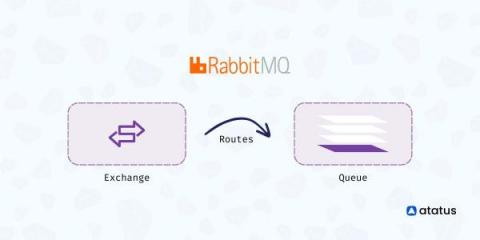
RabbitMQ is one of the most popular open source message brokers. It is designed to provide high availability, scalability and reliability for enterprise level messaging applications. RabbitMQ basically navigates exchanges between a client (producer) and a consumer, who receives these processed messages. Messages are bundled into queues based on their characteristics and adequately processed. This segregation helps organize data much easier and makes alloting similar functions to a single queue.