Systems | Development | Analytics | API | Testing

Syslog Tutorial: Everything You Need to Know

Syslog is a protocol that allows you to transmit and receive notifications in a predefined format from various network devices. Timestamps, event messages, severity, host IP addresses, diagnostics, and other information are included in the messages. It may transmit a range of severity levels, including level 0, which is an emergency, level 5, which is a warning, System Unstable, critical, and levels 6 and 7, which are Informational and Debugging.

The Ultimate Guide to Logging in Python

Logging is used to track events that happen when an application runs. Logging calls are added to application code to record or log the events and errors that occur during program execution. In Python, the logging module is used to log such events and errors. An event can be described by a message and can optionally contain data specific to the event. Events also have a level or severity assigned by the developer. Logging is very useful for debugging and for tracking any required information.

Java Guides: How to Handle the Unclosed String Literal Error

Strings are a fundamental data type in most modern general-purpose programming languages. In Java, strings are defined as character sequences and are represented as immutable objects of the class java.lang.String which contains various constructors and methods for creating and manipulating strings . Below is an example of the string literal "rollbar" being assigned to two different variables a and b which both reference the same (automatically interned) String object.

Operationalize Your Data Warehouse With Reverse ETL

Data warehousing aggregates data from disparate sources so you can run real-time reports for greater business intelligence. However, a data warehouse does more than generate big data analytics. How about using it as a data source rather than just a destination? You can move data from your warehouse to other systems in your networks, such as Salesforce or Zendesk, and improve existing operations.

What is Code Profiling? - A Detailed Explanation

Few lines of code, no matter how great your development team is, run at peak performance when they're originally developed. To discover the most effective technique to make code run quicker, it must be evaluated, debugged, and reviewed. How can software engineers and quality assurance engineers ensure that their code is fast, efficient, and ultimately valuable? The approach is to evaluate an application's code and discover and resolve performance bottlenecks using code profiling.

The 7 Major Players in Enterprise Integration Platform as a Service You Should Look Out For in 2022

Enterprise Integration Platform as a service (EiPaaS) is commonly used to describe a suite of cloud-based tools and services that are designed to support enterprise-grade integration strategy and initiatives. The hallmarks of EiPaaS products are ease-of-use, standardization and pre-built modules such as connection endpoints (usually API-based, to connect to a business application like CRM or ERP), automation flow builder and error handler.

Why Log Data Retention Windows Fail

If you’re using Elasticsearch as part of an ELK stack solution for log analytics, you’ll need to manage the size of your indexed log data to achieve the best performance. Elasticsearch indices have no limit to their size, but a larger index takes longer to query and is more costly to store. Performance degradation is often observed with large Elastic indices and queries on large indices can even crash Elasticsearch when they use up all of the available heap memory on the node.

Why You Need a Salesforce Uploader Today!

With more than 150,000 customers and millions of users, Salesforce processes a lot of data — accounts, contacts, activities, leads, opportunities, you name it. And people are adding more data to Salesforce all the time. As organizations realize the benefits of customer relations, Salesforce has become the number one destination for sales, marketing, eCommerce, and field service data. That's even more accounts, contacts, activities, leads, and opportunities.

Three reasons you need modern cloud analytics now

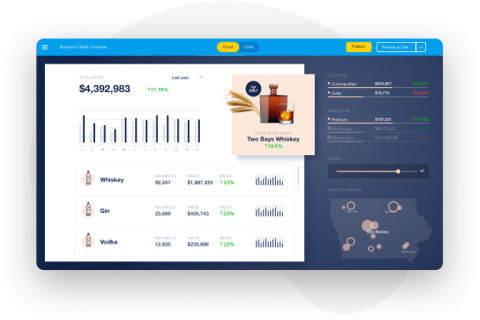
Data is everywhere. As the sheer volume and number of data sources continue to explode, so do new opportunities for modern businesses to create and act on insights. That is if they are equipped with the right analytics technology. Historically, many businesses have settled for “good enough” analytics tools, putting up with lackluster bundles from full-stack vendors in an attempt to minimize cost or risk.