Systems | Development | Analytics | API | Testing

How to Build a Multi-Agent Orchestrator Using Apache Flink and Apache Kafka

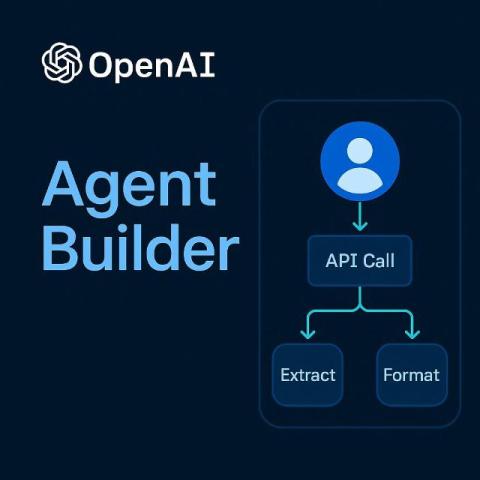
Just as some problems are too big for one person to solve, some tasks are too complex for a single artificial intelligence (AI) agent to handle. Instead, the best approach is to decompose problems into smaller, specialized units so that multiple agents can work together as a team. This is the foundation of a multi-agent system—networks of agents, each with a specific role, collaborating to solve larger problems. When building a multi-agent system, you need a way to coordinate how agents interact.

Understanding Json Templatization With Recursion For Dynamic Data Handling

JSON (JavaScript Object Notation) is a fundamental component of modern web development. Its simplicity and readability have made it a universal data interchange format, used across a wide range of industries and applications. The straightforward structure of JSON, which is both human-readable and machine-parseable, has contributed to its widespread adoption.

How Engineering Teams Should Monitor Customer Health and API Usage

Most engineering teams have infrastructure monitoring nailed down—they are tracking uptime, latency, and error rates, and have set up alerting in places. But API issues don’t always start there. Infrastructure metrics don’t tell you how your API users experience your API. A critical integration may have been repeatedly facing failures due to invalid authentication tokens. A new version you have deployed might have introduced a subtle schema change that breaks older clients.

Revolutionizing IT Operations with GenAI and Agentic AI

Emerging technologies like generative AI (GenAI) and agentic AI are poised to significantly enhance IT operations. These advancements offer new, truly transformative ways to manage, optimize and automate IT environments, and are certain to improve efficiency and foster innovation. GenAI’s ability to process vast amounts of unstructured data and agentic AI’s autonomous decision-making capabilities span predictive analytics to automated problem-solving.

How Anyshift Scales Real-Time Queries Across Millions of Nodes with Koyeb

Anyshift provides AI context for your infrastructure, powered by Annie—an AI infrastructure assistant trained on your environment. From answering complex infrastructure questions to suggesting Terraform code and catching hidden issues, Annie helps teams manage, monitor, and optimize their infrastructure with ease and precision. Unlike generic AI copilots, Anyshift provides context-aware insights based on your actual infrastructure and codebase—not just LLM guesses.

Capturing Multiple Requests On The Same Connection With Ebpf

To incorporate the keywords like "HTTP 403," "HTTP error 503," "the service is unavailable," and "monitor Google Cloud API traffic" into the blog, I would recommend integrating them naturally into the content. Additionally, for internal linking from Keploy.io’s website blogs, here’s a possible update to your blog, integrating the mentioned keywords and linking.

Usage-Based vs. Outcome-Based Pricing for APIs

Usage-based pricing has long been the default for APIs—straightforward to implement and easy for customers to understand. You charge based on consumption: API calls, compute time, or data volume. It is predictable, measurable, and scales well with usage. But as APIs become more intelligent—especially in AI-driven platforms—raw consumption no longer remains a reliable proxy for customer value. A user can rack up thousands of API calls and still achieve nothing meaningful.

Moesif for API Observability and Analytics in NGINX OpenResty

NGINX with OpenResty offers unmatched performance for serving APIs (application programming interfaces) at scale, with the added benefits of the open-source ecosystem. It’s fast, flexible, and production-proven—an ideal choice for scalable web platforms and high-throughput APIs. But even the most reliable platform can leave teams blind to what matters: real-time API usage, user behavior, and production errors.