Systems | Development | Analytics | API | Testing

How ClearML Helps Optimize Resource Allocation Across AI Workloads

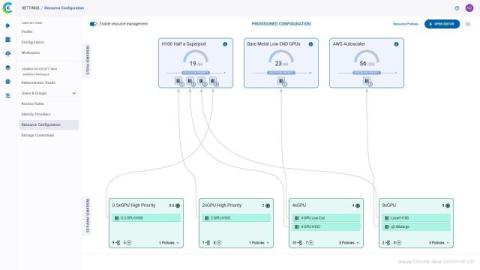
Author: Adam Wolf Efficient resource allocation is a foundational requirement for scaling AI workloads, particularly as organizations move from isolated experiments to shared infrastructure supporting multiple teams, models, and environments. GPUs, CPUs, and high-performance storage are costly and finite, and without coordination, utilization often degrades as usage grows.

How to Calculate Measurable Returns from AI Spend?

AI isn’t just some side project anymore. These days, it’s a real budget line for big companies, something boards talk about all the time. Global investment in AI is about to break $300 billion a year. McKinsey says AI could add up to $4.4 trillion to the economy every year. That’s huge. But even with all this promise, a lot of businesses still have trouble figuring out if their AI projects are actually paying off. That’s the spot most CXOs are stuck in now.

7 things engineering teams get wrong about AI-powered QA

We’ve all been there. When engineering teams evaluate AI-powered QA tools, the same questions come up again and again. Some are rooted in genuine technical curiosity. Others stem from experiences with earlier-generation tools that earned a healthy dose of skepticism. After hundreds of these conversations, I’ve identified the seven most common misconceptions. Contents Toggle.

Agentic Payments: Redefining the Future of Payments for Enterprises

‍ Enterprise payment systems are at a breaking point: rising volumes, tighter margins, and ever-more sophisticated fraud are pushing traditional automation to its limits. The AI-enabled payments market was valued at $38.36 billion in 2024 and is projected to grow over the next decade. As firms seek smarter, real-time decisioning and risk control, highlighting how indispensable AI has become in payment stacks today. -

Tricentis AI Workspace: The new control plane for autonomous quality engineering

AI is reshaping how software gets built, tested, and delivered. For quality engineering teams, AI agents promise extraordinary acceleration by automating analysis, executing tests, generating assets, and orchestrating tasks across the SDLC. But when enterprises begin experimenting at scale, new challenges appear. Where are these agents running? What exactly are they doing? Who approves their decisions? How do we govern them safely?

Why is AI in Learning and Development No Longer Optional?

AI is already here and will be here for years and years to come. The best part is that it will be upgraded to a better version every passing day. And it will keep getting better and better. You must have seen now how people are actively using AI tools these days, and one of the famous examples would be ChatGPT. So, what’s shifting this change? What’s making people so reliant on gen AI tools?

Breaking Silos With AI: Aligning QA, Dev, and Product Teams

Software development has never been faster, yet it has never felt more fragmented. QA, development, and product teams often chase the same goals from different directions. Deadlines tighten, requirements shift, and communication gaps lead to rework or misaligned expectations. While DevOps practices have bridged some of those gaps, true collaboration remains a challenge.

Kong Wins AI Innovator of the Year in SiliconANGLE Media's Tech Innovation CUBEd Awards

We're excited to announce that Kong just took home the AI Innovator of the Year award from SiliconANGLE Media's 2026 Tech Innovation CUBEd Awards. SiliconANGLE Media runs this annual awards program to recognize companies, technologies, and people moving the needle in B2B tech. Winners go through a review process by industry analysts and experts.
Featured Post

From Loose Threads to Tightly Woven - The AI Shift in Software Design

AI is advancing at breakneck speed-from basic rule-based systems to autonomous agents. Over 240,000 AI papers are published annually, with 1.8M+ projects on GitHub and 80+ large language models released in 2024 alone. Forecast AI spend is expected to top $632B by 2028. Amid the hype, the focus must be on delivering real value and preparing for what's next.

From Pixels to APIs: The Programmable Economy is the Agentic Economy

The APIs that have been powering websites and apps created a massive market, but there are only up to 8 billion humans consuming them behind pixels. As LLMs are taking over the world — in the form of productized agents first — there will be 100X more machines than humans. The internet built for agents will look very different. Agents don't need to see, scroll, and click graphical interfaces. They can access the internet programmatically.