Systems | Development | Analytics | API | Testing

StudioAssist + MCP: 6 Hands-On Use Cases Every QA Engineer Should Know

The new StudioAssist Agent Mode turns your AI assistant in Katalon Studio into a connected, context-aware testing partner. It now supports MCP Servers, HTTP-based services that let the agent fetch real-time information and perform actions directly inside your project. Katalon ships with two built-in MCP Servers: You can also add your own HTTP-based MCP Servers to extend StudioAssist’s reach. (Note: authentication support is coming soon.)
QualityKiosk and Katalon Launch Co-Lab: A Joint Innovation Lab Driving the Future of AI-Native Test Automation

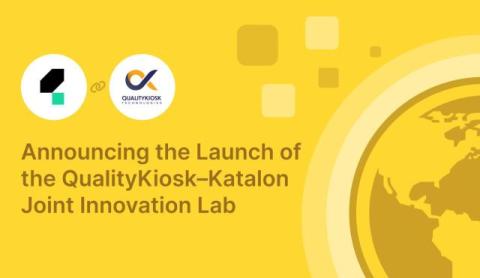
We are pleased to announce the launch of the QualityKiosk–Katalon Joint Innovation Lab on October 15th, marking a significant milestone in our shared mission to advance the future of test automation and quality engineering. This strategic collaboration between QualityKiosk Technologies and Katalon reflects our commitment to empowering enterprises with prebuilt, next-generation testing and automation solutions designed to enhance agility, efficiency, and innovation.

AI-Powered Data Modeling: From Concept to Production Warehouse in Days

Key Takeaways Enterprise data teams spend millions on warehouse infrastructure while still designing schemas the way they did in 1995—one entity at a time, one relationship at a time, hoping the model survives its first encounter with production data. The irony runs deep: organizations racing to deploy real-time analytics are bottlenecked by modeling processes that take six to eight weeks before a single pipeline runs. Data warehouses succeed or fail on design.

Metrics That Matter for Agentic Testing

Traditional test metrics like automation %, pass/fail rates, and defect counts don’t reflect the impact of introducing agents into the QA process. This blog explores a new class of KPIs designed to measure how well your virtual test team is performing including Agent Assist Rate, Human Override Rate, Scenario Coverage Delta, and Review Time Saved.

Introducing New MCP Support Across the Entire Konnect Platform

If you’ve been following Kong, you know that Kong was the first in the API platform space to introduce an enterprise-grade AI Gateway for LLM workloads. Today, we’ve also introduced a new enterprise-grade MCP Gateway to ensure that you can roll out production-ready MCP deployments. But we are focused on more than just the Gateway. Today, we’re excited to announce additional MCP workflow support in the Konnect Developer Portal and a brand new MCP integration solution, the MCP Composer.

Why Fast Analytics Unlocks Smarter Decisions (and AI Readiness)

A few years ago, we looked across many deployments and noticed a pattern: teams would build prototypes, spin up ML pipelines, and then stall. The model’s accuracy dropped. The “aha insights” dried up. The data scientists would get stuck waiting for dashboards to refresh, or data to be cleaned.AI is sexy. It sells. But it doesn’t do itself. The missing piece? Data readiness. Not just fast data.

Introducing the Volcano SDK to Build AI Agents in a Few Lines of Code

Today, we're open-sourcing Volcano SDK, a TypeScript SDK for building AI agents that combines LLM reasoning with real-world actions through MCP tools. Why Volcano SDK? One reason: because 9 lines of code are faster to write and easier to manage than 100+. Without Volcano SDK? You'd need 100+ lines handling tool schemas, context management, provider switching, error handling, and HTTP clients. With Volcano SDK: 9 lines. Look how we compress 100+ lines with the following example: That's it.
Sponsored Post

Testing AI Code in CI/CD Made Simple for Developers

Generative AI can produce code faster than humans, and developers feel more productive with it integrated into their IDEs. That productivity is only real if CI/CD tests are solid and automated. When not appropriately tested, you may encounter a production issue that you haven't seen before. According to the State of Software Delivery 2025 report, 67% of developers spend more time debugging and resolving security vulnerabilities in code generated by AI. That cancels out the efficient gains that they get from faster AI code generation.