Systems | Development | Analytics | API | Testing

Stateful vs. Stateless Web App Design | DreamFactory

Last updated: May 2026 Stateful applications remember information about previous client interactions. Stateless applications treat every request as independent — no memory between calls. The choice between these two designs shapes how an application scales, how it handles failures, and increasingly how AI agents consume it.

Key Integrations Required in a Modern Hospital Management System: EHR, LIS, RIS, Pharmacy, Billing & Beyond

That gap is exactly where inefficiency begins. A modern hospital management system is no longer just about digitization. It is about connection. Without the connections, hospitals face significant hurdles in patient safety and data integrity. Integration is what transforms a collection of tools into a working healthcare ecosystem. When key integrations in a hospital management system are done right, everything changes. Data flows without friction. Clinicians make faster decisions.

Here's the Jira Data Center Alternative You're Looking For

Atlassian recently announced end of life for all their Data Center products, including Jira Data Center. That means every studio must evaluate and choose a new planning tool by Atlassian’s planned sunset date, March 28, 2029. If you’re looking for a new on-premises solution—because cloud options aren’t viable for your team—this blog explains how P4 Plan can meet, and often exceed, what Jira Data Center and Jira Cloud offer now.

RAG and GenAI for Regulated and Public Sector Architectures

As a cloud engineer, I’ve seen organizations rush to implement Generative AI, only to hit a brick wall when the Chief Information Security Officer (CISO) asks about data residency or PII leakage. In the public sector and regulated industries like healthcare or finance, moving fast and breaking things isn't an option.

Enterprise Knowledge Management with RAG for Digital-Native Companies

Enterprise knowledge management RAG (Retrieval-Augmented Generation) is a production-grade AI architecture designed to connect Large Language Models (LLMs) securely to a continuous, real-time flow of proprietary corporate data. Unlike basic RAG implementations that rely on static document uploads and batch-processed vector databases, an enterprise RAG architecture utilizes event streaming to ingest document updates, regenerate embeddings, and synchronize context in real time.

Autonomous Agentic Event-Driven Systems Architecture

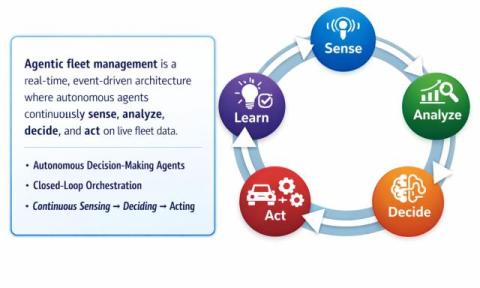
Autonomous / agentic event-driven systems are a class of AI-native architectures where software agents continuously sense events, reason over shared state, take actions, and learn from outcomes—all in real time and without human-in-the-loop orchestration. At an architectural level, these systems combine event streaming, stateful processing, and agentic decision layers to form closed-loop AI systems capable of operating independently at scale.

How a Hospital Management System Improves Patient Flow, Billing & Compliance: A Practical Guide

In an era where healthcare margins are tightening and regulatory scrutiny is at an all-time high, hospitals can no longer afford to operate with siloed systems. The traditional disconnect between clinical operations and financial administration creates a black hole where data gets lost, patients wait too long, and revenue evaporates through billing errors. The solution lies in a robust, centralized hospital management system (HMS).

Load Testing vs Stress Testing: Key Differences and When to Use Each

Load testing and stress testing are not the same thing, even though the terms get thrown around interchangeably in standups, RFPs, and vendor pages. Both put traffic against your service, but they answer different questions. Confusing them costs you either money (over-scoping a test) or a 3 a.m. incident (under-scoping one). This is the short version, then the long one. Is Your Infrastructure Ready for Global Traffic Spikes?

The new era of Healthcare Modernization in 2026 & beyond

Is your legacy healthcare system holding you back? Would you still wear a suit that no longer fits, just because it once looked great? Probably not. The same logic applies to your IT infrastructure. Healthcare organizations often grow comfortable with legacy systems simply because they’ve always worked. But what once worked well may now be putting your operations, patients, and reputation at serious risk.