Systems | Development | Analytics | API | Testing

Trend Reports: Stop Comparing Load Test Results in Spreadsheets

This post is the second in our "Features Sitting Idle" series, where we explore key OctoPerf features that are either misused, misunderstood, or simply unknown to most users. The question comes up every iteration, and yet teams usually handle it the same way: export two reports, open a spreadsheet, and compare numbers manually. It works, but it doesn't scale. After three or four sprints, no one wants to open another spreadsheet.

Build a Custom OBDC Driver as a Server

With the Simba Technologies SimbaEngine SDK, you can build your own custom OBDC, OLEDB, JDBC, or ADO.NET driver to connect your data source to any application, but did you know that you can create a driver that runs on a server with the switch of a configuration setting? You can convert a SimbaEngine SDK ODBC driver into a server by switching build configurations in Visual Studio within Windows or adding BUILDSERVER=exe to your makefile in Linux, then configuring a registry or INI file.

Your Tests Passed. So Why Is Your UI Broken?

So your team just pushed a CSS update. All your functional tests pass, the deployment goes through, and everything looks fine in-browser. Two hours later, a user reports that the checkout button has disappeared on mobile. Technically, the button still works, but now it’s hidden just below the fold, so your tests had no way to flag the issue. This is what’s known as a visual regression, or visual bug, and it’s one of the most common ways UI problems slip into production unnoticed.

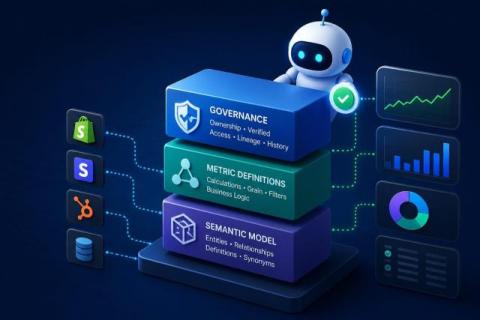
Why AI Agents Need a Semantic Layer (and What That Actually Means in 2026)

Everyone is racing to put an AI agent on top of their data. Almost nobody is asking whether the agent can be trusted to act on what it sees. That is the wrong order. And the way most teams are trying to fix it — bigger context windows, more reasoning, another eval — is also wrong. The generative model stopped being the hard part of agentic analytics months ago. Wiring an LLM to a warehouse is a weekend project.

Connect Your Stripe Revenue Data to Any Destination with Our Integrate.io Stripe Connector

Pull transaction records, subscription lifecycle events, invoice data, and customer metadata into your warehouse, CRM, or AI pipeline, fully transformed, on schedule, with no engineering required. Stripe is the payments infrastructure behind millions of businesses. It processes charges, manages subscriptions, handles invoicing, issues refunds, and tracks disputes, all through a single API. Finance teams, revenue operations, product teams, and growth engineers rely on it daily.

Open Source Registries Are Changing: Here's How Bitrise Keeps Your Builds Running

There is a shift happening in a previously quiet corner of the open source community. You may have experienced this in your own Android builds with an HTTP 429 ("Too Many Requests") error during dependency resolution from Maven Central. Over a period of a few days in late April to early May 2026, a subset of Bitrise users experienced these errors. Here's what happened, what we did about it, and what it means for you.

Multimodal AI Applications, Use cases and Everything Else you need to know

Forget everything you thought you knew about AI! Literally! Yes, we are not lying because a new era has already begun. A technology is emerging that doesn’t just compute… it perceives. It listens, observes, reads, and interprets the world with a blend of senses much closer to our own. It’s the age of multimodal AI, where intelligence is no longer limited to a single stream of data, but fuelled by the combined power of text, images, audio, and video.

Next.js vs React: What's the difference and which should you use?

The Next.js vs React question is not really a comparison between two competing tools — Next.js is built on top of React. React itself is a UI rendering JavaScript library used for building user interfaces across platforms, including web applications and mobile apps with React Native, while Next.js is a framework that wraps React and makes concrete decisions about routing, data fetching, and server-side concerns.