Mobile DevOps Assessment: The results are here!
Learn about the top-level insights and results that came from Bitrise's Mobile DevOps Assessment: Read the key insights from the survey.


Learn about the top-level insights and results that came from Bitrise's Mobile DevOps Assessment: Read the key insights from the survey.
This is Part 4 of the Requirement Gathering Blog series by Rahul Parwal where we explore more on Exploring Requirements. We’d like to thank him for sharing his expertise with the community through this information-packed piece. As a tester, being involved in the ideation stage is crucial in ensuring that the testing issues that may arise later on due to false assumptions are addressed early.
API testing has many moving parts, and in this post you'll be presented with the 5 most essential tools and methodologies.
As an API provider, you probably picture bringing in some type of revenue as part of your API business model. When you first begin the journey of monetizing your API product, you’ll likely find that the complexities of monetization run deep. Much of the time, solving this problem extends beyond the capabilities of a typical API gateway or API management platform.
A well-written test suite is a big part of any successful application. But let's say you rely on an external dependency for some parts of your app (for example, an external API for fetching user information). It then becomes important to mock that dependency in the test suite to prevent external API calls during testing or to test specific behavior. Several frameworks help reduce the boilerplate and make mocking safe for Elixir tests.
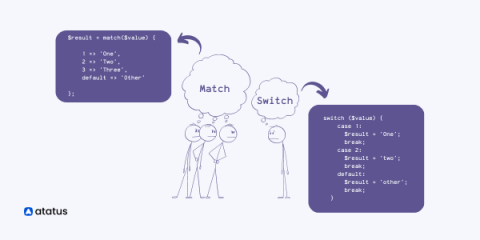
In the world of PHP programming, match and switch statements are both powerful tools for performing value comparisons. While they share some similarities, such as comparing a value against multiple conditions, they also have important differences that set them apart. In this discussion, we'll explore the relationship between match and switch statements, as well as their differences.
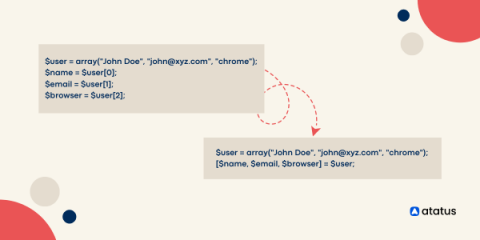
Have you ever struggled with writing lengthy code just to extract values from an array in PHP? If so, there is no need to worry anymore. Array destructuring in PHP offers a quick and efficient solution to this problem, allowing you to extract array values in just a few lines of code. By utilizing array destructuring, you can effortlessly extract values from arrays and make your code more readable and structured. But what is array destructuring, exactly?
The flood of software innovation over the past 20 years would not have been possible without Agile working. The concept of releasing fast, taking feedback and building back better has birthed the iPhone, social networks and the Cloud. The world would be a slower, duller place without it. But we can’t do Agile unless we can get real insights from our user’s screens, and here, the developer tools published by Safari, Chrome and other browsers are crucial.