Systems | Development | Analytics | API | Testing

Open Source ETL Frameworks: A Complete Guide

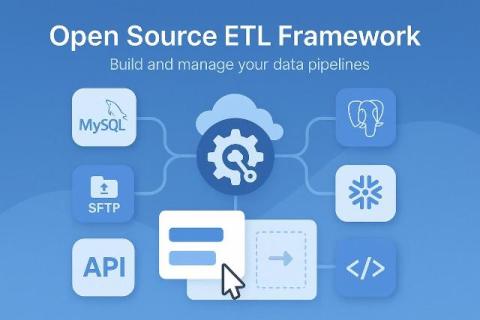
In today’s data-driven world, organizations face the challenge of data processing and integrating vast amounts of information from diverse sources. Open source ETL (Extract, Transform, Load) frameworks have emerged as powerful tools to streamline data workflows, offering cost-effective, scalable, and customizable solutions. This blog delves into the benefits, features, and top ETL solutions in the open source ETL landscape.

Best Open Source Multimodal Vision Models in 2025

AI models are not just about LLMs and generating text. Multimodal vision models—which understand and generate images, videos, and even audio alongside text—are enabling new AI applications. At their core, multimodal vision models combine: There are several different types of multimodal vision models: vision-language models (VLMs) that generate text based on images, vision-reasoning models that answer complex questions based on images, and more.

Are open-source test automation tools always better than commercial ones?

To use or to not use open-source automation tools? That is the question we asked Gokul Sridharan, DevOps and Testing evangelist with 14+ YOE. “It’s subjective”, said Gokul, “there are three core reasons why people get into automation in the first place”. He emphasized the power of automation, and how embracing automation tools can unlock higher scalability. Stay tuned for more interesting insights in our#AutomationDecoded series!

Best Open Source LLMs in 2025

Open source LLMs continue to compete with proprietary models on performance benchmarks for natural language tasks like text generation, code completion, and reasoning. Despite having fewer resources than closed models, these open LLMs offer cutting-edge AI without the high costs and restrictions of proprietary models. However, running these open-source models in production and at scale remains a challenge.

Open Source vs. Closed Source LLMs: Which is Better for Enterprises?

The market for artificial intelligence (AI) stood at $184 billion in 2024 and is expected to more than quadruple in the next six years. While these expectations are astonishing, AI experts think they’re conservative, to say the least, and the actual market value would be considerably bigger. Large language models (LLMs) like GPT 3 have ushered in the age of AI. They’re finding applications as varied as complex scientific research and writing lyrics for rap battles.

Technical Underpinnings of Apache Iceberg

Modern data systems demand flexibility, tool interoperability, and strong data integrity. Legacy formats often create barriers with rigid schemas, inefficient partitioning, and weak transactional guarantees. Apache Iceberg overcomes these limitations with a modular design that decouples metadata from data storage, enabling smooth-schema changes, efficient query pruning, and ACID compliance across engines. This article explores Iceberg’s technical foundations.

Cucumber's Next Chapter: A Community-Driven Future

At SmartBear, we’ve always believed in the power of open source software to drive innovation, transparency, and collaboration. Open source is part of our DNA through Swagger, Pact, and Cucumber, which have become foundational tools for developers worldwide. Today, we’re announcing an important milestone in Cucumber’s journey: SmartBear is transitioning stewardship of the Cucumber project to the Open Source Collective.