Systems | Development | Analytics | API | Testing

The Architecture Decision Your Multi-Agent System Will Live With

Most teams building multi-agent systems hit the same wall at roughly the same point. The prototype works. Agents chain together, tasks complete, the demo impresses the room. Then someone asks: "What happens when this runs a thousand times a day? What happens when an agent calls an external API that's down? How do we know what the agents actually did?" That's when the architecture conversation starts. Here's the framing that clarifies most of these questions.


What is Application Security Audit and Why It's Important for Your Business

A real estate listing platform runs on more moving parts than it looks like from the front end: multiple user roles, MLS and payment integrations, document storage, and a database full of PII and deal terms. Every one of those is part of the attack surface. An application security audit maps that surface. It is a structured evaluation of your application’s code, configuration, and infrastructure that identifies vulnerabilities and weak controls, then ranks them by the risk they actually carry.

Observe Opaque Services With OpenTelemetry eBPF + proxymock

Every SRE team operates services it cannot see into: a vendor binary, an inherited legacy deployment, a container whose owning team dissolved two reorgs ago. The routes are undocumented, the dependencies are unknown, and when a request takes 130 milliseconds nobody can say whether that time is application work or a wait across a network boundary.

Regression Testing in Agile: Test Every Sprint Without Slowing Down

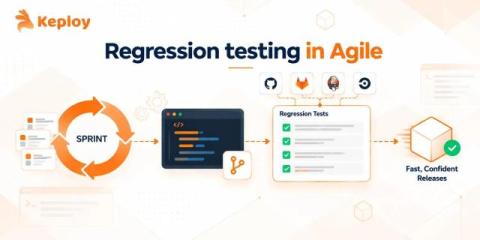
Regression testing in agile happens inside every sprint, alongside the stories being built. Targeted tests run on each pull request, the full suite runs before sprint review and every release, and hotfixes get a check of their own. The whole team shares the work while one tester curates the suite, and it stays fast when tests are chosen by what changed. Every sprint ships new code, and some of it quietly breaks features that shipped months ago.

Test generation got free. Test governance didn't.

Over the past twelve months, something has shifted in how software teams think about quality. Claude Code, Cursor, and Playwright agents have made it genuinely easy to generate functional tests without deep automation expertise. The impact is showing up across two very different kinds of teams: Both paths lead to the same place: tests accumulate without governance, you get coverage without traceability, and there’s automation debt no one owns. But coverage numbers and quality are not the same thing.

8 Best Salesforce Data Cleansing Tools in 2026

Salesforce serves as the operational backbone for sales, marketing, and customer service teams worldwide. When that foundation contains duplicate records, incomplete fields, or outdated information, the consequences cascade throughout the entire organization. Sales teams waste hours chasing leads that already exist in another record. Marketing campaigns target contacts who left their companies months ago.

Role-Based Access Control (RBAC), Explained for Data Teams

Data teams face an impossible challenge: democratize data access across the organization while maintaining security controls and meeting regulatory requirements. Without a structured approach, engineering teams spend 15-25% of their time handling access requests instead of building data products. Role-Based Access Control (RBAC) transforms this operational chaos into a manageable system but only when implemented correctly.

Data Cleansing: The Complete Guide (Process, Techniques, Examples)

Data cleansing sits at the heart of every reliable data pipeline. Yet despite being essential to trusted analytics and decision-making, cleaning data remains one of the most time-consuming and undervalued steps in modern data workflows. With poor data quality creating significant operational challenges, getting data cleansing right has never been more critical.