
Systems | Development | Analytics | API | Testing

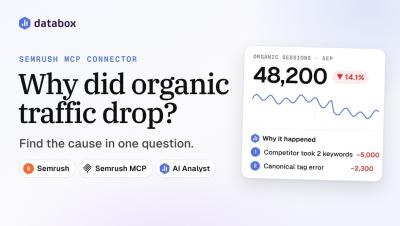
Why did my organic traffic drop? Find the cause with AI (Databox Semrush MCP)

Why did my organic traffic drop? Ask Genie, the Databox AI Analyst, with the Semrush MCP connector. Genie checks your Google Analytics traffic, then runs keyword, competitor, backlink and site audit research in Semrush, all in one answer. In this example, two causes explain almost the whole 14% drop: a competitor took two top keywords, and a canonical tag error went live with a site release. In this video.
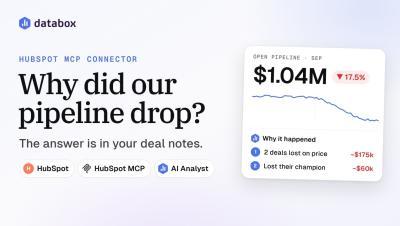
Why did our pipeline drop? Find the cause in HubSpot deal notes (Databox HubSpot MCP)

Why did our pipeline drop? Ask Genie, the Databox AI Analyst, and it reads your HubSpot deal notes through the HubSpot MCP connector to find the cause. In this example, open pipeline is down 17.5% to $1.04M. Genie traces it to 2 deals lost on price after a Sept 1 rate change and 1 deal that lost its champion. In this video: Chapters Key terms Tools and data sources shown: HubSpot (CRM integration and HubSpot MCP connector), Google Analytics, Stripe, Slack. All data is a fictional demo account.

Are Traditional Methods and Tools for Safety and Security Sufficient for the AIDLC of the Future?

AI may make coding faster, but can your safety, security, and verification practices keep pace? In this webinar, Perforce Director of Product Steve Howard examines how the emerging AI Development Lifecycle (AIDLC) could reshape embedded software development and specifically V&V processes. You'll also learn where AI can help, where its limitations remain, and what organizations should consider as they prepare for AI-driven development.

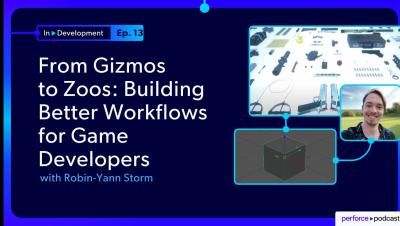
From Gizmos to Zoos: Building Better Workflows for Game Developers with Robin-Yann Storm

How do you solve problems that nobody reports? In this episode, Robin-Yann Storm, tool design director and former developer at IO Interactive, Guerrilla Games, and Apple, shares how a small usability issue with a 3D transform gizmo led to a workflow improvement that developers still use years later, saving thousands of hours. The discussion looks beyond the solution itself to examine the process of discovering the problem, understanding its root cause, and exploring how to solve it. Robin-Yann explains why observing users is often more valuable than collecting feature requests and how small UX improvements can deliver outsized returns.

Error handling in Elixir

In a world where we glorify fast output and moving on to the next thing, we often find ourselves thinking in happy paths only. Let's be honest, though — errors happen. And when you start thinking about properly modelling and handling them when the project is already in full swing, you are too late. Good errors can help reveal what works and what doesn't work.

Sidekiq Unique Jobs: Three Ways to Avoid Duplicates

To avoid duplicate Sidekiq jobs, you have three options: guard enqueues yourself with database flags or a queue scan, use Sidekiq Enterprise’s unique_for option, or add the free sidekiq-unique-jobs gem, which locks jobs in Redis by class and arguments. On Sidekiq 8, sidekiq-unique-jobs 8 with lock: :until_executed covers most cases.

From AI chaos to agentic QA, ft. Andy Weir, author of The Martian and Project Hail Mary

10x faster coding. Same QA. Until now. You're coding faster with AI. But if your agents are siloed and disconnected, those gains aren’t yet showing up in your quality or delivery – it's getting lost in the handoffs. Join SmartBear for a live demonstration of the connected agentic SDLC. See how BearQ extends beyond creating tests to coordinating quality work across Jira, GitHub, and AI-powered workflows – detecting issues, triggering the right next action, and carrying context from one agent to the next.

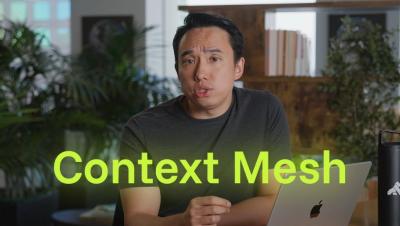
Kong Context Mesh

Kong Context Mesh composes APIs, data, and documents into a single MCP interface that AI agents can call directly, with no custom harness or extra instructions. Built on Kong Konnect, it supports different authentication strategies and data structures, and avoids context window bloat through progressive disclosure and on-the-fly execution. Agents discover tools just in time and retrieve only the context needed for the task. The demo connects internal APIs and external MCP servers, then uses Claude Code to complete a multi-source task.

Why Did My Organic Traffic Drop? How to Find the Cause With AI and Your Semrush Data

Organic traffic usually drops for one of four reasons: a competitor took your rankings, keywords slipped out of the top 10, a technical issue appeared on your site, or you lost backlinks. Your SEO dashboard shows when the drop started. The reason sits in Semrush, split across Position Tracking, Organic Research, the backlink reports and the site audit. Finding it means opening four reports, exporting four files and lining them up against your traffic chart in a spreadsheet.