Systems | Development | Analytics | API | Testing

HealthTech QA Services

A clinical decision support tool suggests the wrong medication dose. A telehealth platform exposes 50,000 patient records. An AI diagnostics chatbot confidently gives incorrect test results. These are not just rare cases; they are real risks when healthcare software is released without proper HealthTech QA Services and healthcare software testing. Healthcare software cannot afford mistakes. In other industries, bugs can cause financial loss or inconvenience.

HIPAA-Compliant Software Development: Development Steps, Best Practices, and Costs

Healthcare software now powers everything, from telehealth visits to patient portals to digital billing. But, as healthcare goes online, these systems hold more sensitive data. Medical records contain far more than clinical notes. They often include identity details, insurance information, payment data, and years of medical history. Protecting that data is not optional. According to the U.S.

Healthcare Data Analytics: Turning Clinical Data Into Better Patient Outcomes

Healthcare isn’t just about medicine anymore; it’s about data. Every test result, clinical note, scan, survey, wearable readout, and insurance claim adds to a growing pool of clinical data. But raw data doesn’t improve outcomes on its own. It has to be interpreted, connected, and acted on.

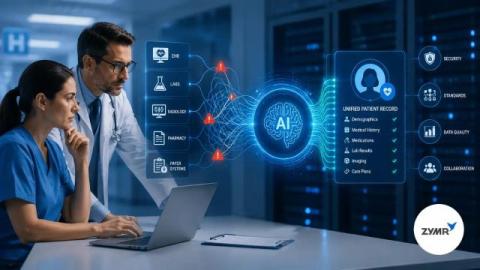
From Chaos to Clarity: How Spotter Unifies Healthcare Data for Better Decisions

Most healthcare teams are making decisions from multiple different dashboards and systems that don't talk to each other, which means someone is manually stitching together the picture—one that's always slightly out of date by the time it's ready. Outdated or incomplete data can lead to fragmented patient care and experiences. And no health system wants that. Whether tracking enrollment targets or auditing claims denials, Spotter applies standardized clinical logic to your unified dataset so you can focus on what matters: the patient. Go from chaos to clarity.

How Automation Is Transforming Risk Assessment in Health Insurance

Key Takeaways Risk in health insurance no longer sits still. It changes with every diagnosis, claim, wearable signal, and care interaction. Treating it as a one-time underwriting event no longer works. Automation doesn’t just make things faster — it keeps things going. With automated risk assessment, insurers can track health risk as it changes, using live, up‑to‑date data instead of one‑time snapshots.

What Is an EHR?

Electronic Health Records (EHRs) are the digital backbone of today’s healthcare. They first began as a simple replacement for paper charts. Over time, they’ve grown into powerful, centralized systems that manage clinical workflows, support data sharing, and help keep patients more engaged in their care. Now, EHRs are much more than just digital filing cabinets.

Hospital Management Software: A Complete Guide for Modern Healthcare Providers

Hospitals today function at the crossroads of urgency, volume, and complexity. Patients anticipate quicker care, clinicians seek more efficient workflows, and administrators require better visibility, all amid rising costs. That’s where Hospital Management Software (HMS) earns its stripes. The global hospital management software market is projected to nearly double, reaching roughly at $57.64 billion by 2035.

Stryker Cyberattack: The Enterprise Security Gaps That Just Exposed a Global Healthcare Giant?

A $25 billion Fortune 500 medical device company, Stryker, was targeted by an Iran-linked hacker group that claimed to have wiped over 200,000 servers, mobile devices, and other systems, forcing the company to shut down offices in 79 countries. The medical technology industry has been hit hard by this huge problem. It's a stark warning that even the largest names in the business world can be hit by clever wiper malware.

The European Health Data Space (EHDS): From Regulation to Reality

The European healthcare landscape is undergoing its most significant digital transformation in decades. We are moving away from a fragmented era where health data was locked within the walls of individual hospitals and national borders. In its place, the European Health Data Space (EHDS) is emerging, a unified digital ecosystem designed to give patients control over their data and unleash its potential for research and innovation.

Doctor Appointment App Development: Process, Costs, and Timeline

‍ In the fast-evolving world of healthcare software development, the bridge between a patient and their provider is no longer a phone line; it is a high-performance mobile application. The demand for Doctor Appointment App Development has transitioned from a "nice-to-have" luxury to a fundamental infrastructure requirement for modern medical practices.