Systems | Development | Analytics | API | Testing

CDSS EHR Integration Best Practices: A Technical Guide for Engineering Teams

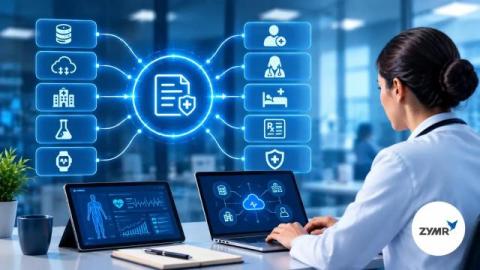
Clinical AI projects usually fail during integration, not development. They work well in controlled environments, but production workflows expose problems. CDS Hooks and FHIR payloads can be inconsistent and incomplete. Engineering teams face a challenge: embedding clinical decision support into existing EHR workflows without disrupting care. The problem is not just about APIs. Teams must manage many things, including CDS Hooks, authentication, and latency constraints.

Embedded Analytics in Regulated Industries - Healthcare and Finance

A dashboard inside an EHR, claims tool, or finance portal is not just reporting. It sits inside a decision path. That changes the bar. With embedded analytics in regulated industries, teams need access control, audit logs, clear metric logic, and a user experience that fits the workflow. Speed matters. So does usability. But compliance-by-design cannot sit after the fact. It has to be built in from the start.

AI and Machine Learning in Healthcare Data Analytics: Use Cases, Architecture & Implementation Guide

Healthcare is sitting on a paradox. As per healthcare analytics statistics 2026 It generates more data than any other industry, nearly 30 percent of the world’s total data, yet 97 percent of hospital data still goes unused. That gap is exactly where AI and machine learning in healthcare data analytics are changing the game. We are no longer talking about dashboards or retrospective reports.

Why Healthcare Organizations Need Governed AI Analytics

For healthcare organizations, AI governance is a must-have that can’t be ignored. To safeguard sensitive patient information, healthcare is subject to a variety of different regulations, for example HIPAA in the United States and GDPR in the European Union. As healthcare organizations implement AI, it brings a balance of efficiencies and risks.

The Complete Hospital Management Software Implementation Checklist: A Step-by-Step Playbook for Hospital Leaders

The healthcare landscape in 2026 is defined by a paradox. While the global healthcare IT market is projected to skyrocket toward a US$ 961.26 billion valuation by 2030 according to MarketsandMarkets, hospital leaders are finding that the shiny new tool syndrome is a recipe for disaster. McKinsey highlights that while agentic AI and ambient listening are transforming administrative workflows, the foundation, the Hospital Management Software (HMS), remains the most frequent point of failure.

The new era of Healthcare Modernization in 2026 & beyond

Is your legacy healthcare system holding you back? Would you still wear a suit that no longer fits, just because it once looked great? Probably not. The same logic applies to your IT infrastructure. Healthcare organizations often grow comfortable with legacy systems simply because they’ve always worked. But what once worked well may now be putting your operations, patients, and reputation at serious risk.

Key Integrations Required in a Modern Hospital Management System: EHR, LIS, RIS, Pharmacy, Billing & Beyond

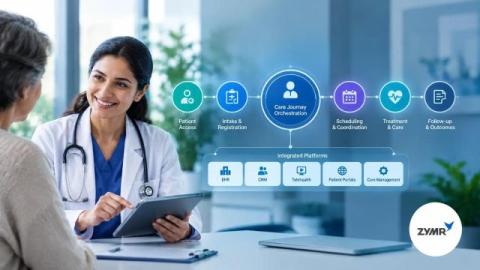
That gap is exactly where inefficiency begins. A modern hospital management system is no longer just about digitization. It is about connection. Without the connections, hospitals face significant hurdles in patient safety and data integrity. Integration is what transforms a collection of tools into a working healthcare ecosystem. When key integrations in a hospital management system are done right, everything changes. Data flows without friction. Clinicians make faster decisions.

From EHR to Telemedicine: Types of Healthcare Software Transforming the Industry

The emergence of digital transformation technologies led to a nationwide change, causing a profound impact on various industries throughout the world. Among the conventional sectors affected by it, the healthcare industry emerged prominently. Interestingly, it not only disrupted but also provided a significant impetus to the healthcare sector, thereby positively influencing the different types of healthcare software and the medical software industry.

Proven QA Practices for Healthcare Platforms: Built for Real-World Complexity and Scale

Healthcare IT systems operate in environments where even a minor failure can create clinical risks and regulatory consequences. Modern healthcare ecosystems depend on microservices, legacy databases, and multiple third-party integrations, creating vulnerabilities that traditional testing approaches often fail to detect. Engineering teams are managing sensitive information at high-velocity, ensuring that a failed connection or a missed rule never gets in the way of patient treatment.