Systems | Development | Analytics | API | Testing

Banking on Future Growth: Predictions, Challenges, and Performance for Financial Brands

The COVID-19 pandemic and the resulting economic uncertainty forced businesses to rethink how they approach growth. This especially rang true in the financial services industry, where financial trends have the most direct impact. Curiosity, collaboration, and adaptability all became key to surviving this new climate.

Building and Evaluating GenAI Knowledge Management Systems using Ollama, Trulens and Cloudera

In modern enterprises, the exponential growth of data means organizational knowledge is distributed across multiple formats, ranging from structured data stores such as data warehouses to multi-format data stores like data lakes. Information is often redundant and analyzing data requires combining across multiple formats, including written documents, streamed data feeds, audio and video. This makes gathering information for decision making a challenge.

Modernize Payments Architecture for ISO 20022 Compliance

The payments industry is evolving rapidly, fueled by technological advancements, changing consumer behaviors, and a growing appetite for real-time transactions. As this transformation unfolds, new standards have been introduced to ensure the payments ecosystem's safety, security, and efficiency.

Data Engineering for AI at Scale with Qlik and Databricks

For data engineers, the Generative AI (Gen AI) era is a transformative shift in how we approach data architecture and analytics. Professionals at the forefront of this shift will be gathering in San Francisco, at the Data+AI Summit June 10-13. Attendees will be exploring tools that integrate with Databricks Intelligent Data Platform that decrease data management costs and improve data's impact on business outcomes.

Serverless Decoded: Reinventing Kafka Scaling with Elastic CKUs

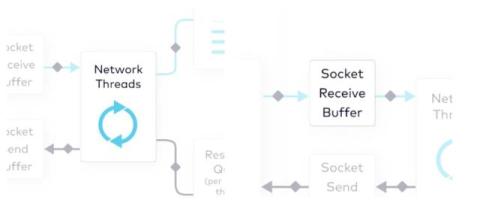
Apache Kafka has become the de facto standard for data streaming, used by organizations everywhere to anchor event-driven architectures and power mission-critical real-time applications. However, this rise has also sparked discussions on improving Kafka operations and cost-efficiency—streaming data is naturally prone to bursts and often unpredictable, resulting in inevitable variations in workloads and demand on your Kafka cluster(s).

7 Crucial Data Governance Best Practices To Implement

Data governance covers processes, roles, policies, standards, and metrics that help an organization achieve its goals by ensuring the effective and efficient use of information. It sets up the processes and responsibilities necessary to maintain the data’s quality and security across the business. Data governance manages the formal data assets of an organization.