Systems | Development | Analytics | API | Testing

OpenTelemetry Trace Testing for CI Release Gates

OpenTelemetry is great at answering one question: “what just broke?” The problem is that most teams need a different answer first: “what is about to break in this release?” That is where trace-based testing comes in, especially for teams running a vendor-neutral OTel stack (Collector + Tempo/Jaeger + Prometheus) and needing deterministic release gates.

Is OpenTelemetry overkill? There's a lazier (and better) way. #speedscale #sre #ebpf #kubernetes

If you "aspire to be lazy" like we do, you know that building staging environments and mocking complex back-ends (like MySQL, AI models, and 3rd party APIs) is a massive time sink. In this demo, we show you how to use Internet Magic (aka eBPF) to: Stay tuned for Part 2, where we take these recordings and spin up a staging environment automatically.

OpenTelemetry vs. Deep Runtime Telemetry: Which Is Better for Your Node.js Stack?

If you're running Node.js in production, you've likely heard the buzz around OpenTelemetry. It's the industry standard for observability, backed by major vendors, and it promises vendor-neutral telemetry collection across your entire stack. For many teams, it's a game-changer: finally, a unified way to collect traces, metrics, and logs without getting locked into a single vendor's ecosystem.

Analyzing OpenTelemetry Logs in Moesif for Operational and Business Insights

As your application grows, the volume of telemetry data expands with it. Every additional service, customer, and feature generates more log entries. It becomes harder to quickly isolate the events that actually matter. Without the right tools, finding a single root cause can feel like searching for a needle in an ever-growing haystack. You may have already been using log search tools to find and act on errors. However, those tools rarely connect that data back to your API traffic patterns or metrics.

Future Trends in Distributed Tracing for Microservices

Distributed tracing is essential for managing the complexity of modern microservices. It provides visibility into how requests flow through interconnected systems, helping to identify bottlenecks, errors, and latency issues. As microservices adoption grows - 61% of enterprises already use them - tools like OpenTelemetry, Dynatrace, and DreamFactory are shaping the future of observability. Each offers unique solutions for monitoring and troubleshooting distributed systems.

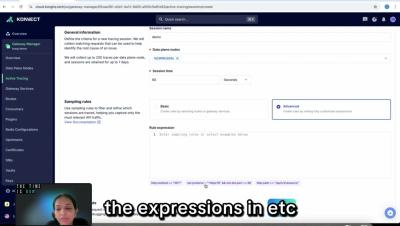
How to Troubleshoot API Latency in Kong Gateway with Active Tracing

Stop spending hours debugging API performance issues. This video introduces Active Tracing in Kong Gateway, a feature designed to help you instantly identify bottlenecks and troubleshoot delays in your traffic. You'll learn how to: Initiate an Active Tracing session to capture detailed request and response traces.

Implementing OpenTelemetry Observability with Kong Konnect & Dynatrace

Observability has become critical to ensuring the effective monitoring of application and system performance and health. It focuses on understanding a system’s internal state by analyzing the data it produces in the context of real-time events and actions across the infrastructure. Unlike traditional monitoring, which mainly notifies you when issues arise, observability offers the tools and insights needed to determine not only that a problem exists but also its root cause.

Tracing, Logging, Metrics: Unifying Observability with OpenTelemetry

Software development has always evolved with new paradigms to meet the growing demands of modern systems. One of the most significant shifts has been the adoption of microservices. Emerging in the early 2010s, this architectural pattern moved away from monolithic applications in favor of smaller, independent services that interact with each other over a network.

Introducing Active Tracing (Tech Preview)

We're thrilled to announce the tech preview of Active Tracing, a significant advancement in Kong Konnect. This innovative feature unlocks unparalleled visibility into API traffic as it flows through Kong Gateway, empowering you to optimize performance, troubleshoot issues, and refine your API strategies.

Achieving API Traceability with OpenTelemetry and Moesif

APIs power complex and modern applications and in doing so they’ve also become a challenge to observe, monitor, and analyze. Even the apps we rely on daily consists of numerous services, each glued together by dedicated APIs that interact with one another in intricate ways. In today’s market, you have to make sure that API complexity doesn’t hurt the visibility you need to possess into your product.