
The latest News and Information on Software Testing and related technologies.
This spring, Sauce Labs announced the Sauce Testrunner Toolkit (beta) to expand developer-first capabilities and support for native JavaScript frameworks. The Testrunner Toolkit makes setting up, writing, and running web tests easier and faster for developers during early pipeline testing. First it supported Puppeteer, followed by Cypress, TestCafe, and Playwright to provide the flexibility to test the way you want, along with Sauce Labs insights, at scale.
Automation testing has become a recognized domain in the world of software testing. As the name implies, automation testing involves the use of automated tools to carry out test cases with minimal human intervention, then comparing various outcomes and generating test reports. Automated testing is a crucial part of every Agile team to keep up with the demands for fast but high-quality software projects.
For example, let’s say that an app that we’re working on supports multiple themes, and that we’re keeping track of the user’s currently selected theme (and other user-configurable settings) through a SettingsController — which in turn uses Foundation’s UserDefaults API to persist those settings, like this.
The world is witnessing the rise of Agile methodologies in software development. They require a new approach to software testing, which must well align with the nature of Agile, a fast-moving philosophy. Test automation was not born to serve Agile teams, however, it makes Agile testing- a crucial part of the Agile concept- achievable. This article shows all essentials for the implementation of automation testing for Agile teams.
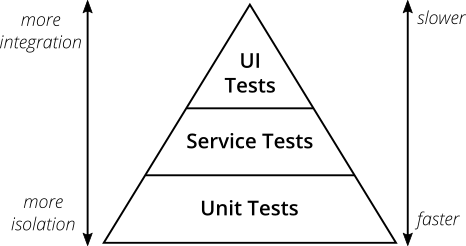
In our last post, we looked at the multiple layers of testing and where UI tests fit into your overall architecture. In case you didn’t read it, here’s a TLDR: Testing architecture can be grouped into 3 “layers”: Layer 1 tests tiny chunks of code in complete isolation. Layer 2 tests larger pieces of code in partial isolation.
The landscape of software testing is changing. In the hyper-competitive world of technology, speed and quality are often seen as opposing forces. We are told to “move fast and break things” if we are to succeed in getting our products into the hands of users before our competition beats us to the punch. This often times means sacrificing quality and confidence in the name of getting new features out the door.
Deep in the implementation of every automated UI test lives the potential to turn something simple into something slow and unreliable—simply by adding extra Selenium commands. The data clearly show that longer tests are less likely to pass. In this case study, I will show you how to optimize a test and make it 560% faster. We will do this by tackling inefficient use of Selenium commands.