Mailchimp
Not subscribed to OpsMatters Newsletter


The GPT euphoria got doused with some reality recently as Samsung employees realized they were sending false information to customers and Italy outright banned ChatGPT. The hype and concerns further accelerated last week with the godfather of AI, Hinton, resigning from Google, President Biden summoning AI leaders to Washington, and several stocks nose-diving on the threats generative AI poses to their business models.
Developer productivity is a complex subject for which there is no magic bullet. However, economic pressure, increased market competition and shorter delivery circles force many organisations to improve their efficiency and to open up new models of operations. Measuring, maintaining and eventually improving engineering productivity in an increasingly hybrid workplace are important discussions many organisations are having right now.
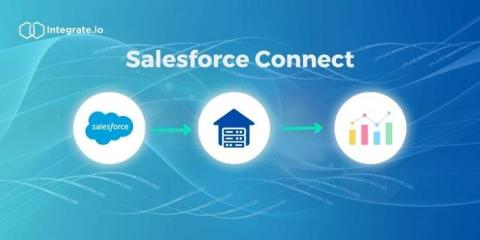
Are you considering integrating your external CRM or ERP system with the Salesforce platform? Look no further than Salesforce Connect, an integration tool that promises to display and use external data as if it were natively stored within Salesforce. This tool has been hailed as providing "seamless integration of data across system boundaries." But does it live up to the hype, or is there a better alternative out there?
Looking for the perfect chat solution can be a daunting task. You need a provider that not only supports all the necessary chat features but also offers delivery and scaling guarantees to ensure a smooth chat operation as your business grows. While it might be tempting to start with a simple solution and see how your needs evolve, underestimating the importance of finding the right provider can be a costly mistake.
Discover how to use Maven and Jenkins to build and automate your project and how they work together for continuous integration.
With its strong emphasis on convention over configuration, Ruby on Rails has counteracted many architectural considerations that caused bikeshedding when building web applications. Still, one area that has continuously piqued developers' interest is how to handle business logic, i.e., code that epitomizes "what an app does." Another way to phrase this question is: Where do we put all the transactional code?