Systems | Development | Analytics | API | Testing

Latest posts

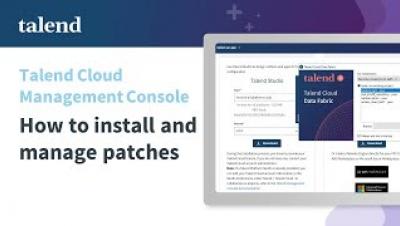
[DEMO] How to manage Talend Studio updates from Talend Management Console?

Talend Cloud provides powerful graphical tools and 900+ connectors and components to connect databases, big data sources, on-premises, and cloud applications. Design cloud-to-cloud and hybrid integration workflows in Talend Studio and publish them to a fully managed cloud platform. If you are using Talend Cloud Management Console with Talend Studio, depending on your license, you can create executable tasks for Jobs, Data Services, and Routes published from Talend Studio and run them directly in the cloud or on Remote Engines, ensuring the security of your data. =

Why manual testing for ServiceNow doesn't work - and what to do about it

Here's the simple truth: ServiceNow's digital workflows are only as effective as your release process allows them to be. This is why organizations have honed in on testing as a source of strategic advantage to help them release faster, improve the customer experience, and boost productivity.

5 reasons changing performance platforms shouldn't be scary

Maybe you've thought about changing your performance testing platform, but have a lot of fears: Will you waste money? Lose valuable time? Open your company up to risk? Change doesn't have to be scary. Read this eBook to learn five reasons why changing performance testing platforms shouldn't be frightening, and a few strategies to ensuring your migration is a success.

Kong: Implementing an API-First Operating Model & Accelerating Digital Transformation

The API-native operating model puts the developers at the center. The layers between developers and customers/users have vanished, and developers are now in the front row to deliver digital experiences that will make or break their organization's position in the market. In this webinar, Kong Senior Solutions Engineer Paul Vergilis and Kong Senior Solutions Engineer Ahmed Koshok discuss what an API-First Operating Model looks like.

Complete ETL Process Overview (design, challenges and automation)

The Extract, Transform, and Load process (ETL for short) is a set of procedures in the data pipeline. It collects raw data from its sources (extracts), cleans and aggregates data (transforms) and saves the data to a database or data warehouse (loads), where it is ready to be analyzed. A well-engineered ETL process provides true business value and benefits such as: Novel business insights. The entire ETL process brings structure to your company’s information.

Star Schema vs Snowflake Schema and the 7 Critical Differences

Star schemas and snowflake schemas are the two predominant types of data warehouse schemas. A data warehouse schema refers to the shape your data takes - how you structure your tables and their mutual relationships within a database or data warehouse. Since the primary purpose of a data warehouse (and other Online Analytical Processing (OLAP) databases) is to provide a centralized view of all the enterprise data for analytics, data warehouse schemas help us achieve superior analytic results.

FinServ APIs: How to Improve Governance & Deploy with Confidence

Financial services innovation continues to progress at a breakneck pace. For example, fintech developers can programmatically spin up accounts, move money, and issue and manage cards with Increase or embed financial services into their marketplace with Stripe – capabilities that were unimaginable just a few years ago.