Systems | Development | Analytics | API | Testing

Latest posts

Build vs Buy Real Estate Software: How to Make the Right Call

Choosing between building and buying real estate software isn’t just a technical decision—it shapes how fast you move, how much control you keep, and how far your product can scale. Whether you’re launching a PropTech startup or modernizing an existing real estate platform, the wrong choice can lock you into costly limitations, while the right one can become a competitive advantage.

Ep 73 | Out of This World AI: Inside Spaceflight with Jeanette Epps

Human spaceflight is one of the few domains in which data and human judgment must work together flawlessly under extreme pressure. That makes it a powerful lens for understanding what it takes to build resilient, intelligent systems here on Earth. In this Women Leaders in Technology spotlight episode of The AI Forecast, Paul Muller sits down with former NASA astronaut Dr. Jeanette Epps to explore what complex, high-stakes environments can teach us about AI.

Why Enterprise Data Strategy Must Start with Business Strategy

Learn what happens when the executive accountable for data strategy is also the executive accountable for the business results that depend on it. Saugata Saha, President of S&P Global Market Intelligence and Chief Enterprise Data Officer at S&P Global, shares how he manages one of the world's largest financial data estates while driving business outcomes across public and private markets. He breaks down the four pillars of S&P Global's data strategy, the federated organizational model that connects data teams to business value, and why capturing ROI from AI requires deliberate workflow transformation.


Kong: Agentic AI Cost Control for the CFO: Attribution & Visibility

As agentic AI deployments scale, so do the costs and most CFOs are flying blind. Token usage is fragmented across teams, attribution is murky, and finance has no seat at the table when AI budgets spiral. This webinar shows finance and platform leaders how to bring structure to AI spending with real-time visibility, policy enforcement, and cost attribution across every model, agent, and workflow powered by Kong AI Gateway.
Sponsored Post

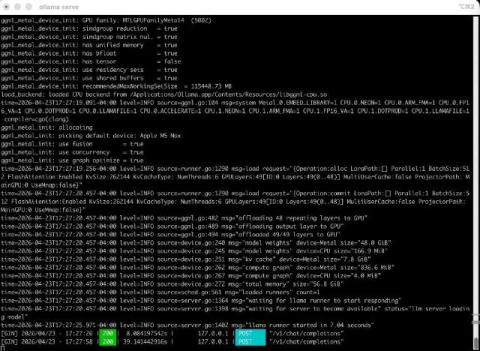
Run Local LLMs on Mac to Cut Claude Costs

Part of the motivation for this post is how cloud API economics are shifting: Anthropic is moving large enterprise customers toward per-token, usage-based billing (unbundled from flat seat fees), which makes "always call the API" a moving cost line for teams at scale. A hybrid or local layer is one way to keep spend bounded while you still use premium models where they matter.

Snowflake Semantic Views + ThoughtSpot: One AI Context Layer

Your data engineers have spent months getting your metric definitions right: revenue recognized the way finance approved it, churn calculated the way your exec team aligned on it, and pipeline logic that your rev ops team actually agrees on. And then a new tool arrives, and someone has to do it all again.

Playwright Test Agents & MCP: A 2026 Architecture Guide

Playwright test agents are LLM-driven execution loops that wrap Playwright's browser automation in a goal-oriented reasoning layer. Instead of executing pre-written scripts, an agent receives high-level intent ("complete checkout and verify the success modal"), inspects the page's accessibility tree, and chooses which Playwright tool to invoke next. The Model Context Protocol (MCP) is the standardized bridge that exposes Playwright capabilities to the LLM and returns structured page context back.

How Wix's AI Agents Stay Ahead of the Rest | Life Is But A Stream

Real-time data and AI are converging—and companies that have already solved the data pipeline problem are pulling ahead fast. Wix processes over 40 billion interactions every day across hundreds of millions of websites, and the architecture behind that scale didn't happen by accident. It was built, lane by lane, around the principle that your upstream data must be at least as fast as your fastest use case.