
We collect the latest Development, Anaytics, API & Testing news from around the globe and deliver it direct to your inbox. One email per week, no spam.
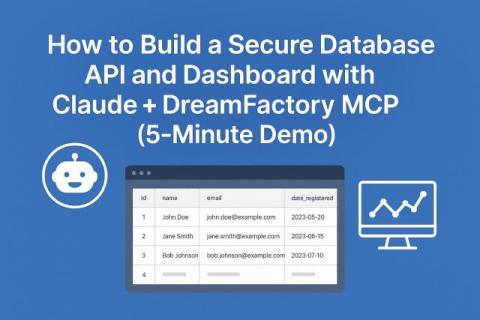
REST APIs are now the backbone of modern systems, powering 83% of APIs, while SOAP lags behind at 15%. Why? REST is faster, simpler, and better suited for today’s needs, including AI and MCP (Model Context Protocol). DreamFactory makes this transition easy with automated REST API generation, robust security, and scalability. Here’s what you need to know.
Organizations are increasingly adopting AI to make quick decisions, understand data, and automate processes. However, this innovation comes at the cost of navigating complex data and AI compliance regulations. While AI regulations are still evolving worldwide, existing privacy laws and regulatory frameworks already apply to AI implementations. These laws, such as GDPR, CCPA, and HIPAA, create a complicated landscape for businesses.
As AI becomes a regular topic in boardrooms, many executives face critical blind spots around strategy, governance, and implementation. Few are AI-native, and many struggle to connect high-level goals with practical, accountable systems. In this episode of The AI Forecast, host Paul Muller speaks with Dr. Maya Dillon, an astrophysicist turned AI thought leader and CEO of consultancy XSAIA. Maya emphasizes the need for human-centric leadership in AI and the importance of understanding the holistic impact of AI on businesses.
Introducing the ThoughtSpot Agentic Analytics Platform. The next era for analytics is not a tool that builds more dashboards but rather a Platform that delivers insights connected to business outcomes.
We’ve all heard of digital assistants that perform specific tasks based on our requests. But what if these digital assistants could operate with ever more autonomy? While this requires an intelligent system, such as an autonomous AI agent, capable of recognizing opportunities and acting on them without constant human input or explicit instructions, the good news is that organizations no longer need specialized developers to build their own agents.
Since Generative Artificial Intelligence (GenAI) captured mainstream attention a few years ago, businesses have been looking for ways to implement AI into their operations. There are some obvious reasons for this shift: saved time, increased productivity, and decreased need for manual effort. But there’s also another factor at play—the realization that not embracing AI now means getting left behind by the competition.
The Model Context Protocol (MCP) is rapidly becoming the connective tissue for agentic AI systems and IDE tooling. Whether you’re building a dev tool that integrates with LLMs or enabling a context-aware API backend, standing up an MCP server is a rite of passage. But MCP is still in its early days and there are some sharp edges. Here are four practical shortcuts to fast-track your MCP server development so you can skip the boilerplate and get to the good stuff: intelligent tooling.
AI coding tools are no longer a novelty. From startups to enterprises, developers are using them to accelerate development, auto-generate tests, and build products faster than ever. Some engineering teams claim they’ve become up to 10x more productive with the right AI coding tool in their workflow. To get a real-world understanding of how these tools are being used, we hosted a community discussion with over 70 tech leaders—CEOs, CTOs, and engineering managers.
Artificial Intelligence is transforming the world, but for those managing AI infrastructure, it can feel like they’re being consumed by complexity. AI solutions often promise automation, efficiency, and intelligent decision-making, but behind the curtain, DevOps teams and IT professionals are wrestling with an ever-growing, complex web of software challenges.