We collect the latest Development, Anaytics, API & Testing news from around the globe and deliver it direct to your inbox. One email per week, no spam.
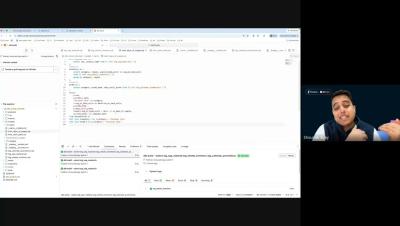
See how Fivetran and dbt help an AI reordering agent make more reliable retail decisions. This end-to-end demo shows how trusted data supports smarter inventory decisions across the enterprise.
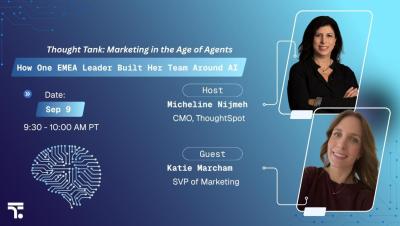
Join us for a live broadcast of The Thought Tank: Marketing in the Age of Agents. Our host and CMO Micheline Nijmeh sits down with Katie Marcham, SVP Marketing EMEA at ThoughtSpot, to pull back the curtain on what it actually looks like to run a modern marketing organization on live data in one of the most complex, relationship-driven markets in the world. They'll cover the transformation Katie's led over the past year: leaner teams, smarter tools, and a tighter partnership with EMEA sales, all grounded in what the data is showing in real time.
Two dashboards, same portfolio, different occupancy numbers. This is the moment most reporting modernization projects start, and it is usually read as a dashboard problem. The tool gets blamed, a replacement gets scoped, and the divergence survives the migration intact. It survives because it never lived in the dashboard. When occupancy reads 91% on one screen and 94% on another, both tools are usually working correctly. They are faithfully rendering two different calculations of the same concept.
Ten reporting platforms compared on current pricing, integrations, white-label options, and AI capabilities, with a clear recommendation for every agency type.
Ask one question with a time range, a metric, a comparison, and a goal. The AI analyst does the gathering. You keep the judgment. To answer any performance question in minutes, ask Databox’s AI Analyst, Genie, one well-built question that includes: a time range, a metric, a comparison, and a goal. Genie queries the data sources you’ve connected, runs the calculation, and returns the answer with a recommendation attached.
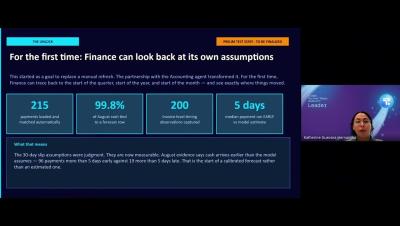
Every month, finance teams rebuild their collections forecast by hand, copying and pasting from disconnected files and hoping nothing breaks. In this video, we use AgentSpot to build a Collections Forecast Agent that connects to accounting files, NetSuite, and live bookings data to automate the full monthly rebuild, reconcile actuals against forecast, and output a traceable Excel workbook your whole team can work from.
Is your data actually ready for AI? While companies rush to deploy machine learning models, 83% of executives realize that high-value, real-time data is trapped at the physical edge—on factory floors, inside hospitals, and at retail terminals. With billions of connected IoT devices, managing this data creates massive hidden headaches like security risks and pipeline blind spots. True AI readiness starts at the edge. Bridge the gap between your edge devices and your AI goals today.
Writing tickets is the tax every PM pays. You know exactly what needs to get built, then you spend an hour turning it into properly scoped Jira issues with acceptance criteria, labels, and the right epic. AgentSpot does the writing for you. In this video, we use AgentSpot to build a Product Assistant that turns a rough feature idea into fully drafted Jira tickets, pulls in context from your existing backlog so nothing gets duplicated, and files them to the right epic ready for grooming.
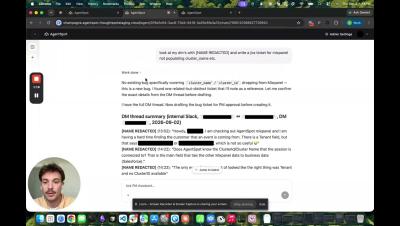
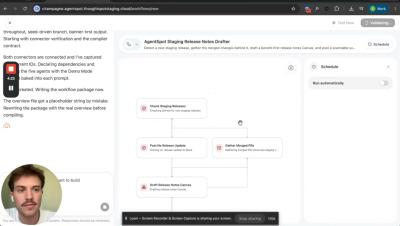
Release notes are the thing that always gets written last, usually by whoever has the least context, usually the morning after ship day. Everything you need is already sitting in GitHub, it just isn't in a form anyone outside engineering can read. In this video, we use AgentSpot to build a Release Notes Workflow that reads what's been merged in GitHub, translates the changes into human-readable notes, posts them to your team's Slack channel, and keeps a running Slack canvas so every release stays in one place.