Agentic Fleet Management Architecture for Real-Time Operations

Agentic fleet management is a real-time, event-driven architecture where distributed AI agents continuously process streaming data to make autonomous operational decisions and execute them through closed-loop feedback systems. At its core, agentic systems enable: Unlike traditional systems that react to events after the fact, agentic architectures operate as adaptive, self-optimizing systems.

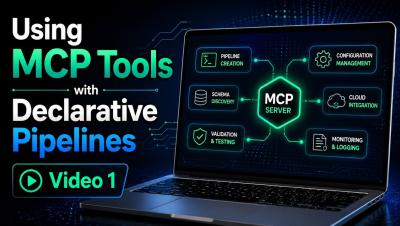
AI Tools for Builders - Confluent's MCP Server & Agent Skills

Your AI coding assistant just learned to speak Confluent. Developers live in their editors. The best platform tools meet them there—and increasingly, that means their AI assistants meet them there too. AI coding tools are already reshaping how developers build, debug, and operate software, but most of them are generalists. They can write an Apache Kafka producer, but they won't know your Schema Registry subjects.

Keynote: Building Intelligent Systems on Real-time Data

Confluent CEO Jay Kreps takes the stage alongside industry leaders at data streaming’s biggest event. Together, they’ll show why free-flowing, real-time data has become the key to unleashing the full potential of intelligent systems across every business. From live demos to real-world use cases to industry-changing product announcements, this year’s keynote is essential viewing for anyone looking to maximize the potential of their AI. Which is pretty much everyone. Don’t miss it.

ClearML Joins the Dell AI Ecosystem Program and Launches AI Factory Blueprints, Making It Easier for Enterprises to Operationalize AI

ClearML is deepening its partnership with Dell Technologies by joining the Dell AI Ecosystem Program, announced at Dell Technologies World 2026. As part of this collaboration, ClearML is launching two pre-validated deployment blueprints — for Kubernetes and OpenShift — available in the Dell Automation Platform catalog, giving enterprises a fast path from bare metal to a full AI stack.

Data Warehouse Design: A Complete 2026 Guide (with examples and templates)

Most data warehouse projects fail. Not because the technology is wrong. Because the design is. Three weeks for a number that should take three minutes. AI agents generating plausible reports nobody can trace. Two ERPs naming the same metric differently. The spreadsheet swamp. The fire drill before every audit. These problems live in the warehouse layer, in how data is modeled, governed, and made available to the people and AI agents that read from it.

The Gap Between AI Ambition and AI Readiness

There is no shortage of ambition when it comes to AI. It shows up in every boardroom conversation, every strategy document, every budget cycle where AI is no longer a novelty project but a line item with real expectations attached to it. Yet, very few organizations actually execute AI in a consistent, repeatable way that’s tied to reliable business outcomes. The problem with readiness is that we tend to treat it like a milestone: something you reach and then move on from.

What "AI-Ready Data" Actually Means And How to Tell If Yours Is

You turned on an AI feature in your analytics tool. It surfaced an insight about your pipeline. You looked at it, paused, and closed the tab because you weren’t sure the number was right. AI-ready data would have made you forward it instead. It’s data that is clean, structured, and governed consistently enough that an AI model can reason about your metrics without a human translating or reconciling them first.

Designing Sovereignty in Real-Time Data Streaming

As regulatory frameworks such as the General Data Protection Regulation (GDPR), Digital Operational Resilience Act (DORA), and Network and Information Security Directive 2 (NIS2) converge with the US Clarifying Lawful Overseas Use of Data Act (CLOUD Act), contractual assurances are no longer a sufficient defense. For senior leadership, digital sovereignty has evolved from a compliance checkbox into a core architectural requirement.

InfiniteWatch + Confluent: Turning Customer Interaction Data into Real-Time Intelligence

Every customer interaction generates signals that matter—a failed checkout, repeated form errors, a frustrated support call, a confusing AI agent exchange, or an unresolved email thread. Individually, these are isolated events. Connected, they reveal customer intent, friction points, operational risk, and opportunities for action.