
gRPC is an open source remote procedure call (RPC) framework that enables client and server applications to communicate with each other remotely and transparently. In this blog post, we are going to discuss gRPC. First, we’ll talk about RPCs and why they are important. Then we’ll explain how gRPC works, taking a closer look at protocol buffers and the architecture of gRPC.
We started 2023 by closing our fiscal year and achieving hypergrowth — once again. We’ve surpassed 600 customers, increased our employee base by 22% year over year, opened our newest office in Singapore following rapid growth in the Asia Pacific region, and expanded meetups to 46 countries and more than 12,000 attendees.
In my previous post on scaling Kong deployments with and without a database, we covered the concepts of deploying Kong with and without a database, as well as using decK, distributed, and hybrid deployments. In this article, we take a tour of some of the possible Kubernetes deployments of Kong. Kubernetes (K8s) is the container orchestration war winner. While there are still deployments using other engines, we see K8s far more.
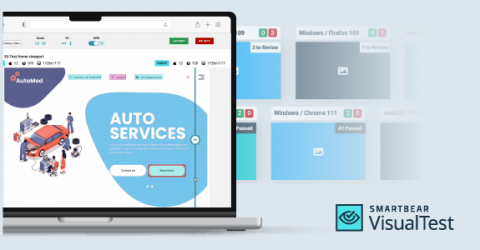
When writing your test automation scripts, it can be especially difficult to write code that adequately identifies visual defects. Typical functional tests do a poor job capturing all visual changes and they also leave you with lengthy and flaky code. And when your code becomes flaky, it becomes unreliable.
The software development landscape today is full of various technologies and message formats that make up applications and systems. These can range from older legacy systems to newer, more modern applications. Because of this, the environment can be complex and challenging for integration developers. Enterprise integrations offer a solution by providing unified connectivity between these different components.
RESTful APIs have become a cornerstone of modern web development, allowing developers to create powerful, scalable, and efficient web applications. When designing REST APIs, it's essential to consider key features like filtering, sorting, and pagination to ensure optimal user experience and server performance. Filtering allows users to narrow down search results by defining specific criteria, while sorting allows results to be ordered in a particular manner.
The proper management of APIs is vital for organizations seeking to optimize their digital experiences and application performance. API management solutions facilitate the efficient administration of APIs by offering several features such as access control, rate limiting, developer portals, analytics, and API versioning.